

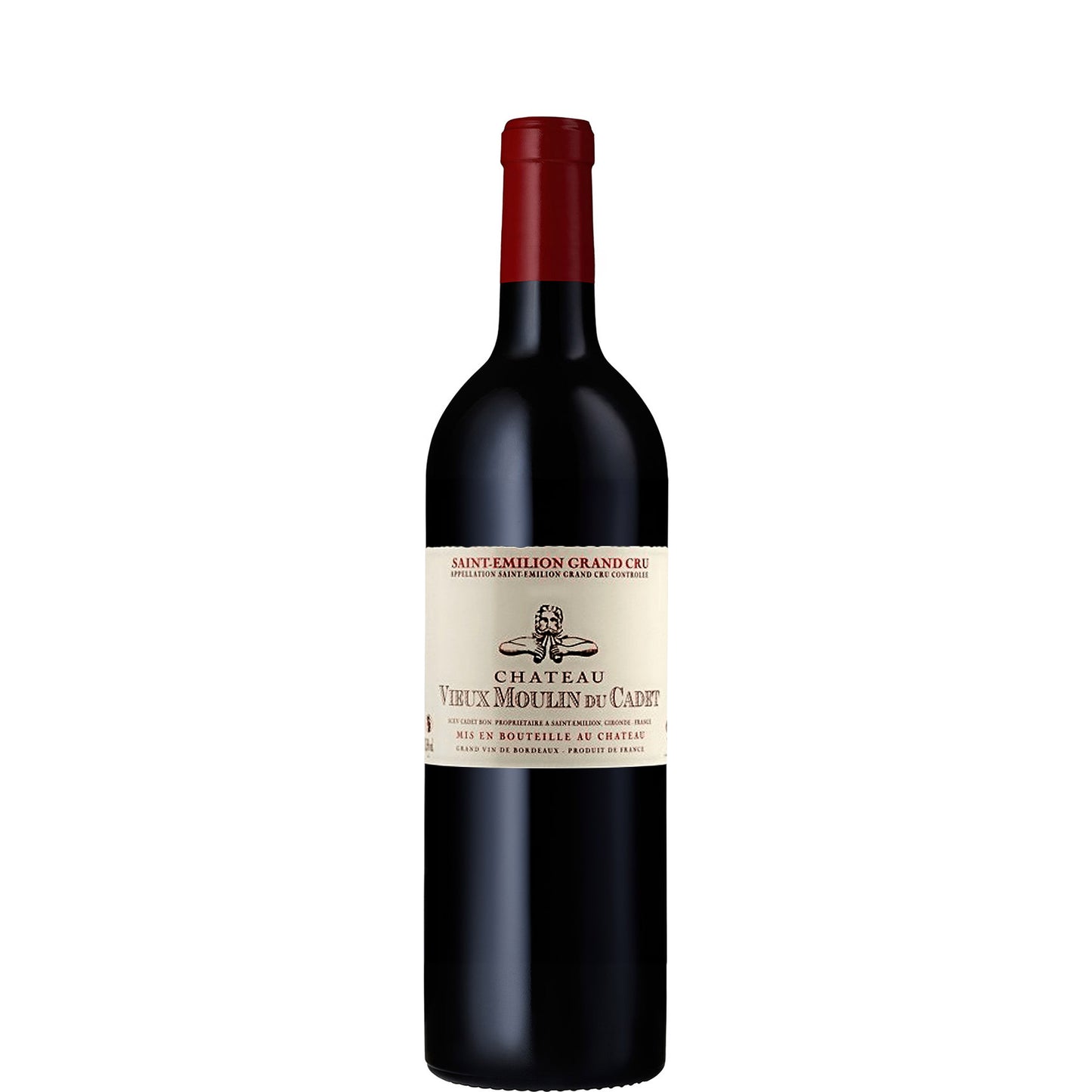
Château Vieux Moulin du Cadet, 2010
Château Vieux Moulin du Cadet, 2010
- 75cl
- 13%
- Red Still
- Merlot, Cabernet Sauvignon
Couldn't load pickup availability

Optimal drinking window: Now - 2035
Château Vieux Moulin du Cadet is a Saint-Émilion estate situated just north of the historic town of Saint-Émilion, within the prestigious Grand Cru Classé classification. Known for producing wines with depth and character, the château is set in an area with rich, limestone-clay soils.
The Vieux Moulin Cadet pairs well with rich dishes such as roasted lamb, beef stews, or game, as well as mature cheeses. Its balanced tannins and complexity make it a great match for hearty meals.
The 2010 vintage across Saint-Émilion was exceptional — a warm, dry summer that produced wines of real concentration and longevity. Château Vieux Moulin du Cadet will have completed its primary fruit phase by now, with the bright cherry and plum of youth fully integrated into a more complex, savoury profile. We are currently in what is likely the sweet spot: the tannins have resolved, secondary complexity is fully present, and the wine retains enough fruit to provide energy and life. It should hold comfortably until 2032-2035, after which the fruit may begin to fade faster than the structure, leaving a leaner, more austere style that will suit some drinkers and not others. Open it now with confidence, but there is no rush.
Tasting Notes
AppearanceDeep garnet, still surprisingly concentrated at sixteen years, with only a faint brick tinge at the rim.
NoseThe 2010 vintage has had time to settle into something genuinely compelling: dried plum, iron, damp earth, and a thread of cedar that speaks to good oak integration. Leather and dried rose petals emerge with a little air, the fruit now secondary to a more savoury, autumnal complexity.
PalateMedium to full-bodied, with tannins that have softened considerably but still provide real presence and grip. Dark cherry, tobacco leaf, and a flinty mineral quality run through the mid-palate, underpinned by the limestone soils that define this part of Saint-Émilion. The structure is the story here — everything is in proportion.
FinishLong, dry, and savoury, with a persistent mineral note that lingers well after the fruit has faded.
Overall impressionA wine that has arrived — quietly authoritative, with Saint-Émilion's limestone character at its most legible.
Food Pairings
In Saint-Émilion and the wider Gironde, this kind of wine finds its natural place at a table set for something substantial. Roasted lamb with garlic and herbes de Provence is the classic match — the wine's iron and earth singing alongside the meat's richness. Beef braised slowly in red wine, a daube bordelaise, is almost too obvious but completely right. Locally, it would also appear alongside magret de canard, where the duck's fat and gaminess need exactly this kind of structured, dry red to cut through. Aged hard cheeses — a wedge of Comté or a piece of good Ossau-Iraty from the Basque foothills — work wonderfully as the evening winds down.
We think this wine would go well with
Serve at 17-18°C — too warm and the wine loses its mineral precision, too cool and the tannins tighten unnecessarily. Decant for at least forty-five minutes; at sixteen years old the wine doesn't need dramatic aeration but will open noticeably with a little time in the glass. A large-bowled Bordeaux glass gives the nose room to develop and lets the wine's structure reveal itself gradually rather than all at once.
The vineyards sit on the limestone-clay soils that characterise the northern reaches of Saint-Émilion's plateau, where the bedrock is close to the surface and drainage is naturally good. This combination encourages vines to root deep and produce fruit with genuine concentration rather than simple ripeness. The clay fraction retains just enough moisture to buffer warm summers, while the limestone lends the wines their characteristic mineral edge and structural backbone.
Saint-Émilion Grand Cru is the broader classification beneath the elite Premier Grand Cru Classé tier, encompassing a large number of estates across the appellation's varied soils and slopes. It is subject to annual application rather than a fixed list, which gives it a slightly different character from the rigid Médoc classification. Merlot dominates here, unlike the Cabernet-led Left Bank, which makes for wines that are typically rounder in youth and more approachable earlier — though the best, from limestone soils, age with real authority. Compared to neighbours like Pomerol, Saint-Émilion tends to offer more structural grip and earthy mineral definition.
The 2010 growing season in Bordeaux delivered exactly what vignerons pray for: a textbook progression from wet winter through warm, dry summer to perfect harvest conditions. Spring brought sufficient rainfall to replenish water reserves, followed by a gloriously sunny July and August that stressed the vines just enough to concentrate flavours without burning the fruit. September's cool nights and warm days allowed for unhurried picking, with most châteaux harvesting under clear skies through October.
What emerged was a vintage of remarkable balance and precision, particularly on the Left Bank where Cabernet Sauvignon achieved full ripeness whilst retaining its structure and freshness. The wines possess dense, dark fruit with firm tannins that feel ripe rather than harsh, wrapped in acidity that promises excellent ageing potential. Right Bank Merlots show similar poise, with rich plum and chocolate flavours supported by mineral backbone. These wines are drinking beautifully now but will continue to evolve gracefully until 2035, making 2010 one of those rare vintages that satisfies both early drinkers and patient cellaring enthusiasts.
FAQs
What does Château Vieux Moulin du Cadet 2010 taste like?
At sixteen years old, this is firmly in secondary territory: dried plum, tobacco, iron, and damp earth rather than fresh fruit. There is a persistent mineral quality that comes from the limestone soils of Saint-Émilion's plateau, and the tannins have softened into something genuinely elegant. It is structured and savoury rather than lush.
Is this wine ready to drink now?
Yes, and we would not hesitate. The 2010 vintage gave this wine exceptional depth and longevity, but it is now in a very good place — complex, resolved, and drinking with real authority. Decant it for forty-five minutes and it will reward you generously.
How long can I cellar this wine?
It should hold well until 2035. After that, the fruit will gradually recede and the wine will become leaner and more austere. If you enjoy that style, push further; if you want the balance of fruit and complexity, drink it in the next five to eight years.
What food should I serve with this wine?
Roasted lamb is the obvious answer and a very good one. Slow-braised beef, magret de canard, or anything with some richness and savoury depth will work well. Aged hard cheeses are also a fine match if you are grazing rather than cooking.
How should I serve it?
Serve at 17-18°C in a large Bordeaux glass. Decant for at least forty-five minutes before pouring — the wine will open considerably with a little air and show more of its complexity.
How does this compare to better-known Saint-Émilion estates?
Château Vieux Moulin du Cadet sits within the Grand Cru Classé tier rather than the top Premier Grand Cru Classé level, so it does not carry the name recognition of an Angélus or a Pavie. What it does offer is genuine limestone-plateau character at a fraction of the price — and in a vintage like 2010, that matters. The wine is honest, well-structured, and speaks clearly of where it comes from.

OUR GROWERS
Château Vieux Moulin Cadet


What are you looking for tonight? Tell me the occasion, a grape, a region — or just try a suggestion below.
Your recommendations will appear here.
-
-
Speak to one of our Wine Gurus
Speak to a Wine GuruWith years of experience, our team can help you with all your wine buying and selling needs