

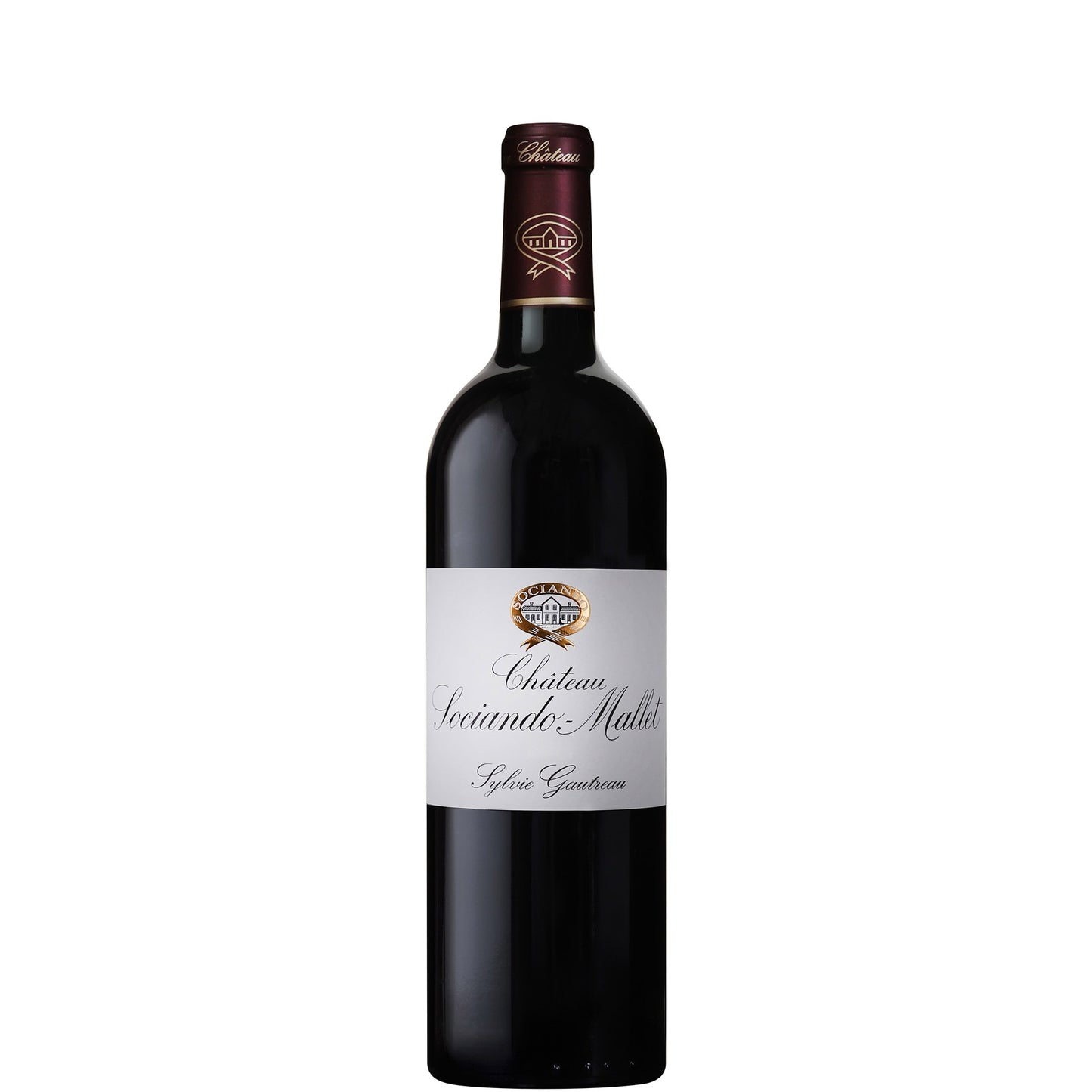
Château Sociando-Mallet, 2000
Château Sociando-Mallet, 2000
- 75cl
- 12.5%
- Red Still
- Cabernet Sauvignon, Merlot, Cabernet Franc
Couldn't load pickup availability

Optimal drinking window: Now - 2035
A cracking bottle of classic, old-school Haut-Médoc. The 2000 Sociando-Mallet is now hitting a glorious phase… the sort of claret that reminds you why Bordeaux is Bordeaux.
2000 was a landmark year on the Left Bank - ripe, confident fruit, impeccable balance, and structure built for the long haul. Sociando-Mallet thrived, producing one of its most complete and age-worthy wines of the decade, now drinking beautifully but still very much alive.
Sociando-Mallet sits on superb gravel and clay overlooking the Gironde, and despite its “humble” status outside the 1855 Classification, it's long been one of the Médoc’s great insider estates.
The 2000 Sociando-Mallet is at, or very close to, its peak right now — the tannins have resolved, the fruit is at its most expressive, and the secondary savoury and mineral notes are fully integrated. Over the next five years or so it will hold this plateau confidently, perhaps gaining further nuance and dried-fruit depth as the primary freshness slowly softens. By the mid-2030s expect the fruit to become more mellow and tertiary, with leather, dried herbs, and earth becoming increasingly dominant. Beyond 2040 it will depend on cellar conditions, but Parker's revised timeline — suggesting this comfortably drinks until the mid-2030s at least — seems right to us, and a well-stored bottle could surprise well into the 2040s.
What the critics say:
"Bright ruby-red. Rich, perfumed aromas of black raspberry, blackberry, minerals and cocoa powder. Big, dense, lush and deep, but with lovely sappy vinosity; this expands impressively to fill the mouth. Finishes very long, with suave, broad tannins and a note of black olive. A gloriously successful vintage for Sociando-Mallet, offering a full range of cabernet aromatics."
"This is a beautiful wine and certainly one of the great sleepers of the vintage. I originally predicted that this wine would be at full maturity between 2007 and 2028, but I would push that back by a good 4-5 years. Still inky/purple, with notes of acacia flowers intermixed with wet rocks, black currants, and blueberries, the wine is full-bodied, displays no real evidence of any oak, and offers up terrific concentration, texture, and length. For those who bought this beauty at $30-35 when it was available, this was a terrific buy, and it should continue to evolve for 20+ years."
Tasting Notes
AppearanceDeep ruby with a still-inky core and only the faintest amber at the very rim — impressive for a 26-year-old wine.
NoseBlack raspberry and ripe blackcurrant up front, with the cool mineral undercurrent — wet stones, a touch of graphite — that is Sociando's signature. Cocoa and dried dark olive come in time, along with a whisper of acacia flower that feels distinctly 2000.
PalateFull-bodied and generous without being heavy — the fruit expands to fill the mouth with a sappy, vivid energy that belies its age. Tannins are broad and suave now, well-integrated, with the concentration to carry the wine forward rather than letting it coast.
FinishVery long, with a savoury, mineral persistence and a dark olive note that lingers pleasantly.
Overall impressionClassic Médoc at a glorious moment — the structure is still there, but the wine has stopped making you wait for it.
Food Pairings
In the Médoc, this would traditionally be poured alongside an entrecôte bordelaise — sirloin finished with a reduction of local red wine, bone marrow, and shallots. The estuary being close, lamprey à la bordelaise is another classic pairing, its richness cut neatly by the wine's tannic spine. A slow-roasted rack of Pauillac lamb, fragrant with thyme and garlic, would be the celebration choice. Aged hard cheeses — a wedge of Comté or Ossau-Iraty — work beautifully at the end of a meal, drawing out the wine's savoury, mineral character.
We think this wine would go well with
Serve at 17-18°C — any warmer and the fruit starts to feel soft and blowsy. Decanting is still worthwhile: 45 minutes to an hour should be enough to open the wine up without stripping away the secondary complexity it has spent 25 years building. A large-bowled Bordeaux glass gives the aromatics room to gather and lets you appreciate that expansive mid-palate properly.
The estate sits on a superb ridge of deep gravel and clay-limestone soils overlooking the Gironde estuary, just north of Saint-Estèphe in the Haut-Médoc. That gravel drains freely and warms quickly, favouring Cabernet Sauvignon ripeness, while the proximity to the estuary moderates temperature extremes and reduces frost risk. The combination gives wines with the structural backbone of the northern Médoc and the aromatic generosity of a warmer, more confident vintage.
Haut-Médoc is the catch-all appellation for the southern portion of the Médoc peninsula, covering communes that fall outside the six famous crus communaux — Pauillac, Saint-Estèphe, Saint-Julien, Margaux, Moulis, and Listrac. It's a broad church, ranging from modest everyday claret to estates like Sociando-Mallet that outperform many classified neighbours. The rules require a minimum 40% Cabernet Sauvignon and modest yields, but the real quality differential here, as everywhere in Bordeaux, comes down to site and ambition.
The 2000 vintage in Bordeaux arrived with a sense of millennial occasion, and for once, the hype had something behind it. The growing season was largely favourable, with a warm, dry summer that allowed grapes to ripen steadily without the drama of late-season rain washing out the finish line. September delivered the kind of weather winemakers dream about: fine, warm days that concentrated the fruit while preserving freshness. Cabernet Sauvignon on the Left Bank performed particularly well, producing wines with firm but ripe tannins and real depth of fruit. Merlot on the Right Bank was similarly impressive, giving Pomerol and Saint-Émilion some of their most complete wines in years.
The result is a vintage that sits confidently in the top tier without being flashy about it. These are serious, structured wines — serious in the sense that they were built to last and have largely done so with great composure. The best Left Bank estates are hitting their stride now, offering the kind of balance between fruit and secondary development that makes older Bordeaux worth the wait. Drink the better Médocs until 2030 and beyond; the Right Bank wines are arguably at or just past their peak, so if you have bottles, now is the time to open them rather than admire them.
FAQs
What does the 2000 Sociando-Mallet taste like?
Rich and generously proportioned, with black raspberry, blackcurrant, and graphite on the nose, a full-bodied palate with broad, integrated tannins, and a long savoury finish with a characteristic dark olive note. It has the vivid, sappy energy that made 2000 such a celebrated Left Bank vintage.
When should I drink this wine?
It's drinking very well right now and will continue to do so until at least 2035, with a well-stored bottle holding its own into the early 2040s. This is not a wine that needs more patience — open it, decant it, and enjoy what 25 years of cellaring has produced.
Is Sociando-Mallet a classified growth?
It is not, and that's half the point. Jean Gautreau famously declined to be included in any reclassification effort, building the estate's reputation entirely on the quality of the wine. Among Bordeaux insiders, it is one of the Médoc's most respected addresses — classified or otherwise.
What food should I serve with this?
Think classic Bordelais: entrecôte with a bone marrow and shallot sauce, slow-roasted rack of lamb with thyme and garlic, or a generous wedge of aged Comté. The wine's structure and savoury depth can handle richness, and it rewards food that has some substance to it.
How should I serve this wine?
Serve at 17-18°C and decant for 45 minutes to an hour. The wine will open up with air but has enough secondary complexity that you do not want to overdo it. A large-bowled Bordeaux glass is the right vessel.
Is this good value for a wine of this age and quality?
Sociando-Mallet has always punched above its price point relative to classified Médoc estates of comparable quality. The 2000 vintage was a landmark year on the Left Bank, and this wine earned serious critical scores — yet it trades at a fraction of what a classified Pauillac or Saint-Julien from the same year would cost. For those who know the estate, that gap still feels like an opportunity.

Explore related wines


What are you looking for tonight? Tell me the occasion, a grape, a region — or just try a suggestion below.
Your recommendations will appear here.
-
-
Speak to one of our Wine Gurus
Speak to a Wine GuruWith years of experience, our team can help you with all your wine buying and selling needs