

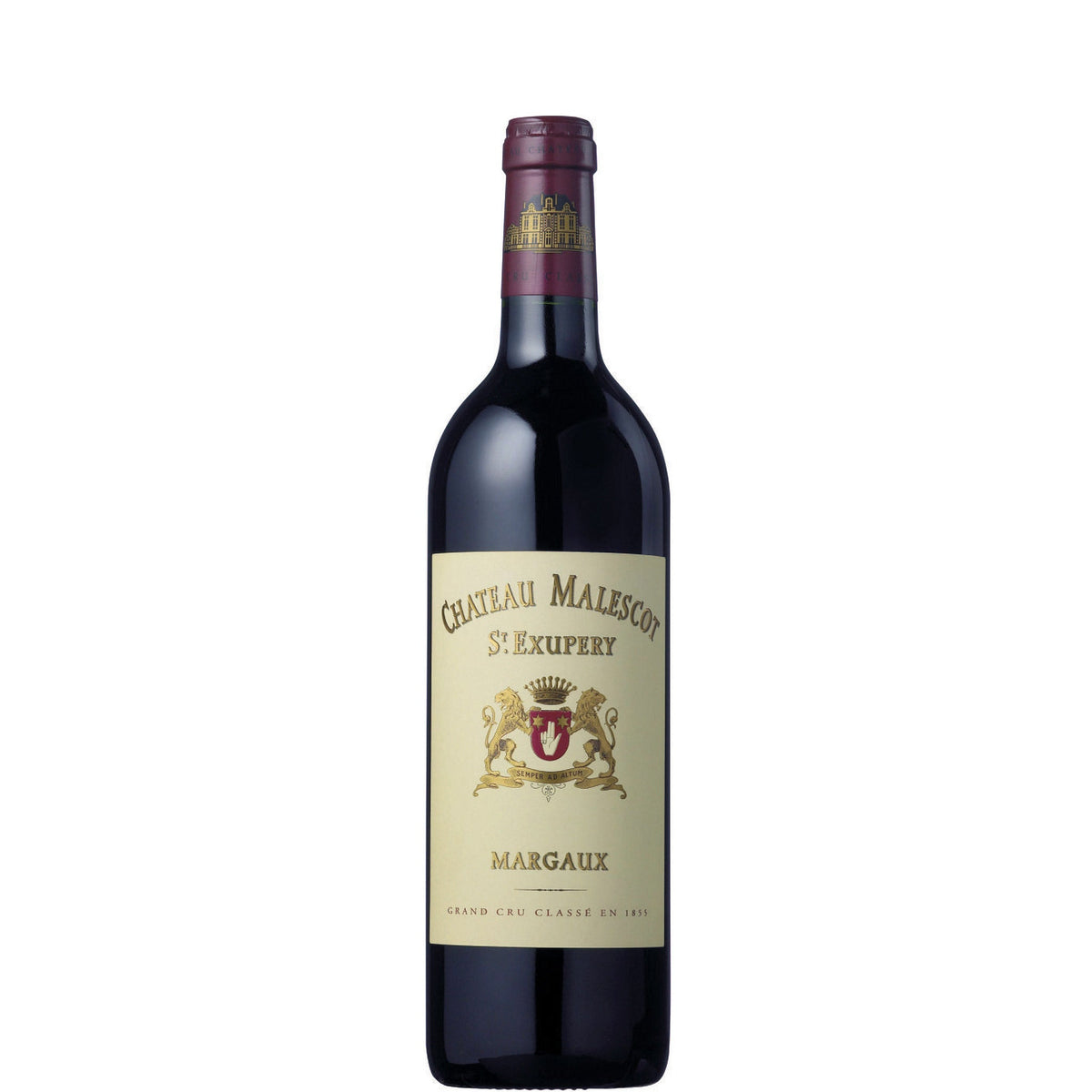
Château Malescot Saint-Exupéry, 2016
Château Malescot Saint-Exupéry, 2016
- 75cl
- 13.5%
- Red Still
- Cabernet Sauvignon, Merlot, Cabernet Franc, Petit Verdot
Couldn't load pickup availability

Optimal drinking window: Now - 2048
About Château Malescot Saint-Exupéry, 2016
Located in Margaux, Château Malescot Saint-Exupéry crafts wines of finesse and elegance, reflecting the estate's gravelly terroir and commitment to traditional winemaking techniques.
Currently showing primary blackcurrant fruit with emerging graphite minerality, this wine will integrate beautifully over the next few years as the oak marries with the fruit. Between 2028 and 2035, expect the rose petal florals to become more prominent while secondary notes of cedar, tobacco, and earth develop complexity. The tannins will soften progressively, revealing more of the wine's inherent elegance and tension. Peak drinking will likely occur between 2030 and 2045, when primary and secondary flavours achieve perfect balance.
What the critics say:
"A stunning red with currants, blackberries, roses and violets. Medium to full body, ultra-fine tannins and polish and finesse to the powerful tannins. A real stunner. Better than 2015. Take a serious look at it, beginning 2024."
"The 2016 Malescot Saint Exupéry has a well-defined bouquet of ample red currant, cranberry and strawberry fruit laced with rose petal and hints of graphite. There is something almost Saint Julien–like about the aromatics. The palate is medium-bodied with supple, graphite-infused black fruit, and quite linear and poised, but it conveys a genuine sense of energy and tension toward the classic finish. A magnificent Margaux."
"Medium to deep garnet-purple colored, the 2016 Malescot St. Exupery sings of cassis, fragrant earth, tobacco and lilacs with a compelling waft of mocha. Medium to full-bodied and strutting loads of expressive fruit layers at this youthful stage, it's framed by ripe, grainy tannins and oodles of freshness, finishing with great length and depth."
Tasting Notes
AppearanceMedium to deep garnet-purple with excellent clarity and a youthful rim.
NoseCaptivating aromatics of blackcurrant and cranberry with rose petals and graphite minerality. There's an almost Saint-Julien-like precision to the fruit, lifted by hints of mocha and fragrant earth. The bouquet is well-defined and expressive, showing both power and elegance.
PalateMedium to full-bodied with supple, graphite-infused black fruit that's both dense and vivid. The tannins are ripe and grainy but beautifully integrated, providing structure without overwhelming the fruit. There's genuine energy and tension here, with layers of expressive fruit framed by excellent acidity and a linear, poised character.
FinishThe finish is classic and compelling, going on for minutes with great length and depth.
Overall impressionA magnificent Margaux that perfectly balances power with finesse, showing why critics consider it superior even to the excellent 2015 vintage.
Food Pairings
In the Médoc, this would traditionally accompany agneau de Pauillac - the sweet, herb-fed lamb that grazes the estuary marshes - roasted simply with garlic and thyme. Local chefs might serve it alongside côte de bœuf with shallot confit, or the region's famous entrecôte à la bordelaise with bone marrow and red wine reduction. The wine's elegance also pairs beautifully with game birds like palombe (wood pigeon) or becasse (woodcock) during the autumn hunting season, often prepared with wild mushrooms from the pine forests. Cheese would typically be a well-aged Roquefort or local goat's cheese from the Dordogne.
We think this wine would go well with
Serve at 17-18°C to showcase both the fruit precision and structural complexity. Decant for 90 minutes to two hours - this wine has the density to benefit from aeration but the elegance to show well without excessive breathing time. Use Bordeaux glasses with a generous bowl to concentrate the aromatics. If opening before 2030, consider decanting up to three hours ahead to allow the tannins to soften and the graphite minerality to emerge fully.
The 23-hectare vineyard sits on the classic Margaux terroir of deep Günzian gravel over clay subsoil, providing excellent drainage while retaining enough moisture for the vines. The gravelly topsoil reflects heat during the day and radiates it back to the vines at night, helping to ripen the Cabernet Sauvignon fully while maintaining freshness. This combination of drainage and heat retention creates the ideal conditions for producing wines with both power and elegance, the hallmark of great Margaux.
Margaux is the most southerly of the great Médoc communes and arguably its most elegant, with gravelly soils that favour Cabernet Sauvignon but produce wines of remarkable finesse rather than power. The appellation covers 1,413 hectares across five communes, with stricter regulations than neighbouring appellations requiring lower yields and higher vine density. Unlike the more muscular wines of Pauillac or the structured styles of Saint-Estèphe, Margaux specialises in perfumed, graceful wines that show their best with extended cellaring.
The 2016 growing season in Bordeaux handed growers a masterclass in patience and precision. A sodden spring delayed flowering, then summer heat arrived just when the vines needed it most, followed by crucial September sunshine that allowed unhurried ripening. The Merlot on the Right Bank reached beautiful concentration, while the Cabernet Sauvignon across the Gironde had time to develop the structure that makes this vintage so compelling.
What emerged was a vintage of remarkable poise—wines with serious backbone but without the austerity that can make young Bordeaux forbidding. The tannins have grip without being harsh, the fruit has depth without being jammy, and there's an energy running through these wines that keeps them lively rather than ponderous. Most 2016s are drinking superbly now, showing their character whilst retaining plenty in reserve, and the better examples will reward cellaring until 2035 or beyond.
FAQs
What does this wine taste like?
Blackcurrant and graphite minerality with rose petals, showing both power and elegance typical of great Margaux. The tannins are firm but supple, with excellent energy and a finish that goes on for minutes.
When should I drink this wine?
It will be at its best from 2028 until 2045, though it's built to last even longer. The wine needs a few more years to integrate fully, but patience will be rewarded with exceptional complexity.
What food pairs well with this wine?
Perfect with roasted lamb, côte de bœuf, or game birds. The wine's elegance also complements aged hard cheeses like Roquefort, while its structure stands up to rich, meat-based dishes.
Should I decant this wine?
Yes, decant for 90 minutes to two hours to allow the tannins to soften and the complex aromatics to emerge. If opening before 2030, consider decanting up to three hours ahead.
Is this wine worth cellaring?
Absolutely - this is a wine built for the cellar. Critics are calling it even better than the acclaimed 2015, and it has the structure and complexity to develop beautifully over the next 15-20 years.
How does this compare to other Margaux wines?
This shows classic Margaux elegance with exceptional tension and energy. Critics noted it has an almost Saint-Julien-like precision while maintaining the perfumed, graceful character that makes Margaux unique among the great Médoc communes.

Explore related wines


What are you looking for tonight? Tell me the occasion, a grape, a region — or just try a suggestion below.
Your recommendations will appear here.
-
-
Speak to one of our Wine Gurus
Speak to a Wine GuruWith years of experience, our team can help you with all your wine buying and selling needs