

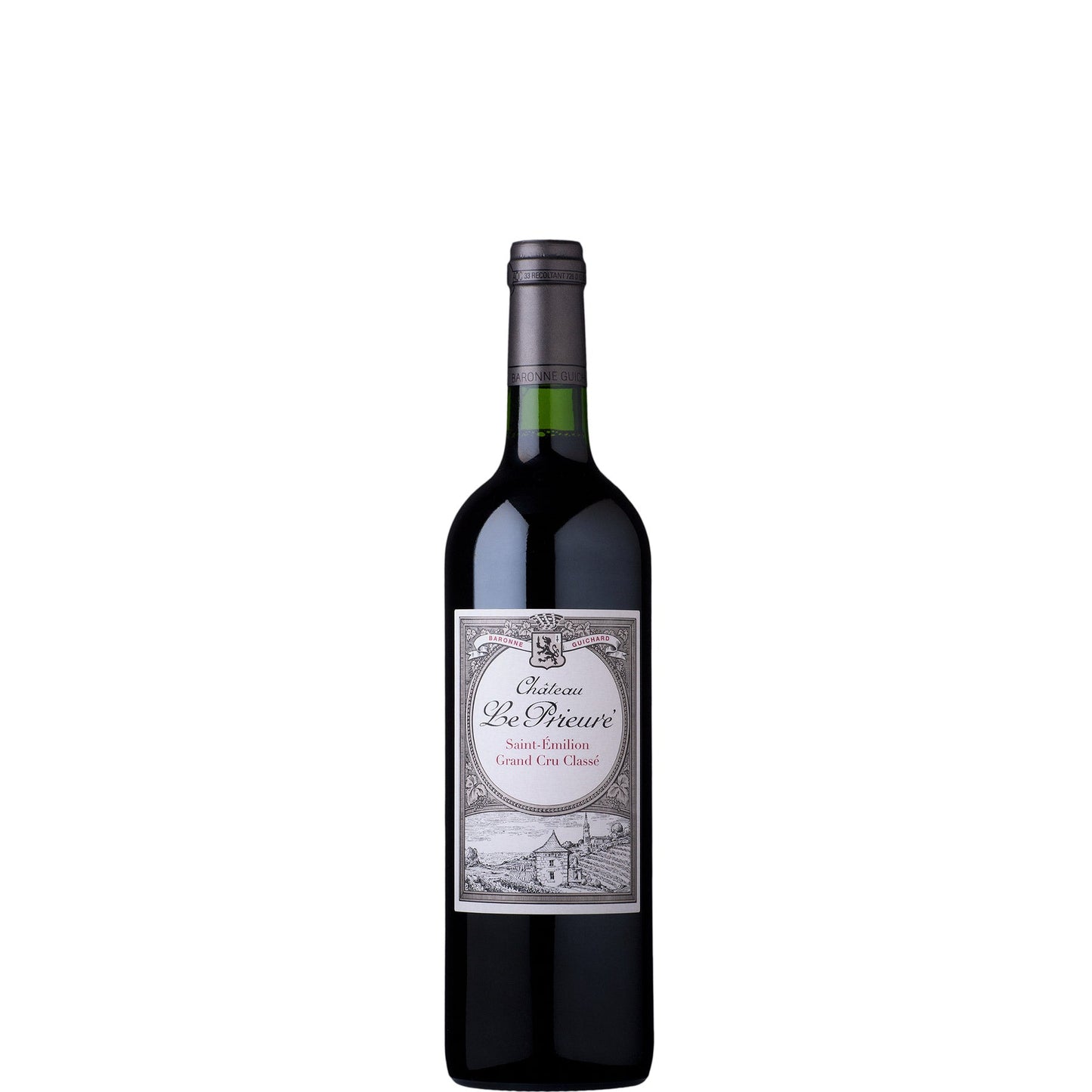
Château Le Prieuré, 2014 - Half-bottle
Château Le Prieuré, 2014 - Half-bottle
- 37.5cl
- 13.5%
- Red Still
- Merlot, Cabernet Franc
Couldn't load pickup availability

Optimal drinking window: 2026 - 2034
About Château Le Prieuré, 2014 - Half-bottle
The Château Le Prieuré is an elegant Saint-Émilion Grand Cru, showcasing a classic Right Bank style that leans toward refinement and subtle complexity.
The 2014 vintage, with a cooler growing season, resulted in wines with freshness, fine tannins, and a balanced structure. Château Le Prieuré’s limestone-rich soils contribute to the wine's mineral character, while the predominance of Merlot, complemented by Cabernet Franc, provides a plush texture and vibrant fruit profile.
This 2014 is now in its drinking window, having shed its primary fruit intensity for more complex secondary characteristics of leather, earth, and herbs. The tannins have softened considerably and integrated well with the fruit. Over the next five to eight years, it will continue to develop tertiary complexity while the remaining fruit gradually fades. The limestone minerality will likely become more prominent as the wine ages, and the texture will become increasingly silky before starting a gentle decline around 2034-2035.
Tasting Notes
AppearanceDeep garnet with brick highlights showing its twelve years of age.
NoseRipe dark plum and blackberry mingle with cedar, leather, and dried herbs. There's a distinctive limestone minerality underneath, along with hints of tobacco and forest floor from bottle development. The fruit remains fresh despite the secondary complexity.
PalateMedium to full-bodied with silky, integrated tannins that show the benefit of time. Dark fruit flavours are complemented by earthy complexity and a chalky mineral thread that runs through the wine. The texture is refined rather than powerful, with good freshness keeping everything in balance.
FinishLong and mineral-driven with lingering dark fruit and a subtle earthy complexity.
Overall impressionA mature Saint-Émilion showing the elegance possible from cooler vintages and limestone soils.
Food Pairings
In Saint-Émilion, this would accompany the region's hearty Périgord cuisine: duck confit with garlic potatoes, côte de boeuf with bone marrow, or wild boar stew with juniper berries. Local chefs often serve it alongside aged Comté cheese or the region's famous foie gras, where the wine's minerality cuts through the richness. Lamb with herbs de Provence is another classic pairing, the wine's earthy complexity complementing the herbs and the limestone minerality balancing the meat's richness.
We think this wine would go well with
Serve at 16-17°C to showcase both the fruit and the developed complexity. No need to decant given the wine's age and the half-bottle format, though thirty minutes of breathing will help it open up. Use Bordeaux glasses to concentrate the aromatics, and open it an hour before serving to let the wine settle after any cork disturbance.
The vineyard sits on Saint-Émilion's distinctive limestone plateau, with soils rich in calcium carbonate over clay subsoil. This combination provides excellent drainage while retaining enough moisture for the vines during dry periods. The limestone imparts a characteristic mineral backbone to the wines, while the clay component helps Merlot achieve full phenolic ripeness. The elevated position catches cooling breezes that preserve acidity during warm vintages.
Saint-Émilion Grand Cru represents the appellation's quality tier above the basic Saint-Émilion AOC, requiring stricter yield limits and longer ageing before release. The wines must be Merlot-based blends that capture the Right Bank's softer, more approachable style compared to the Cabernet Sauvignon-dominated Left Bank. Saint-Émilion's patchwork of soil types creates distinct sub-regions, with the limestone plateau producing wines of particular finesse and longevity. The appellation's 2012 classification revision elevated quality standards across the region.
The 2014 vintage in Bordeaux caught many off guard with its surprising quality after a challenging growing season. A cool, wet summer had growers worried, but September delivered exactly what was needed: warm, dry conditions that allowed the grapes to ripen properly and concentrate. The harvest stretched well into October, demanding patience from producers who picked selectively rather than rushing to beat the weather.
What emerged were wines with a freshness that many riper vintages lack, built on firm tannins and bright acidity that gives them genuine aging potential. The Merlot performed particularly well on the Right Bank, whilst the Cabernet Sauvignon struggled more in cooler sites but excelled where producers waited for full ripeness. These wines are drinking beautifully now but will reward cellaring until 2030 and beyond for the better examples. We find 2014 offers tremendous value precisely because it didn't grab headlines like its neighbours.
FAQs
What does this wine taste like?
Ripe dark plums and blackberries with earthy complexity, silky tannins, and a distinctive chalky minerality from the limestone soils. At twelve years old, it shows lovely bottle age character.
When should I drink this wine?
It's drinking beautifully now and will continue to develop complexity until around 2034. The 2014 vintage was cooler, producing wines with good acidity and longevity.
What food pairs well with this wine?
Classic with roast lamb, duck confit, or aged hard cheeses. The earthy complexity works wonderfully with mushroom dishes and herb-crusted meats.
Do I need to decant this wine?
No need to decant given its age and the half-bottle format, but allow thirty minutes of breathing time to let the aromas open up fully.
Is this wine worth cellaring further?
It's in its prime drinking window now. While it will hold for several more years, the pleasure is in drinking it over the next five to eight years as it develops tertiary complexity.
How does this compare to other Saint-Émilion wines?
This represents the refined, elegant style of Saint-Émilion Grand Cru rather than the more powerful approach of some estates. The limestone terroir gives it distinctive minerality and structure.

OUR GROWERS
Château Le Prieuré


What are you looking for tonight? Tell me the occasion, a grape, a region — or just try a suggestion below.
Your recommendations will appear here.
-
-
Speak to one of our Wine Gurus
Speak to a Wine GuruWith years of experience, our team can help you with all your wine buying and selling needs