

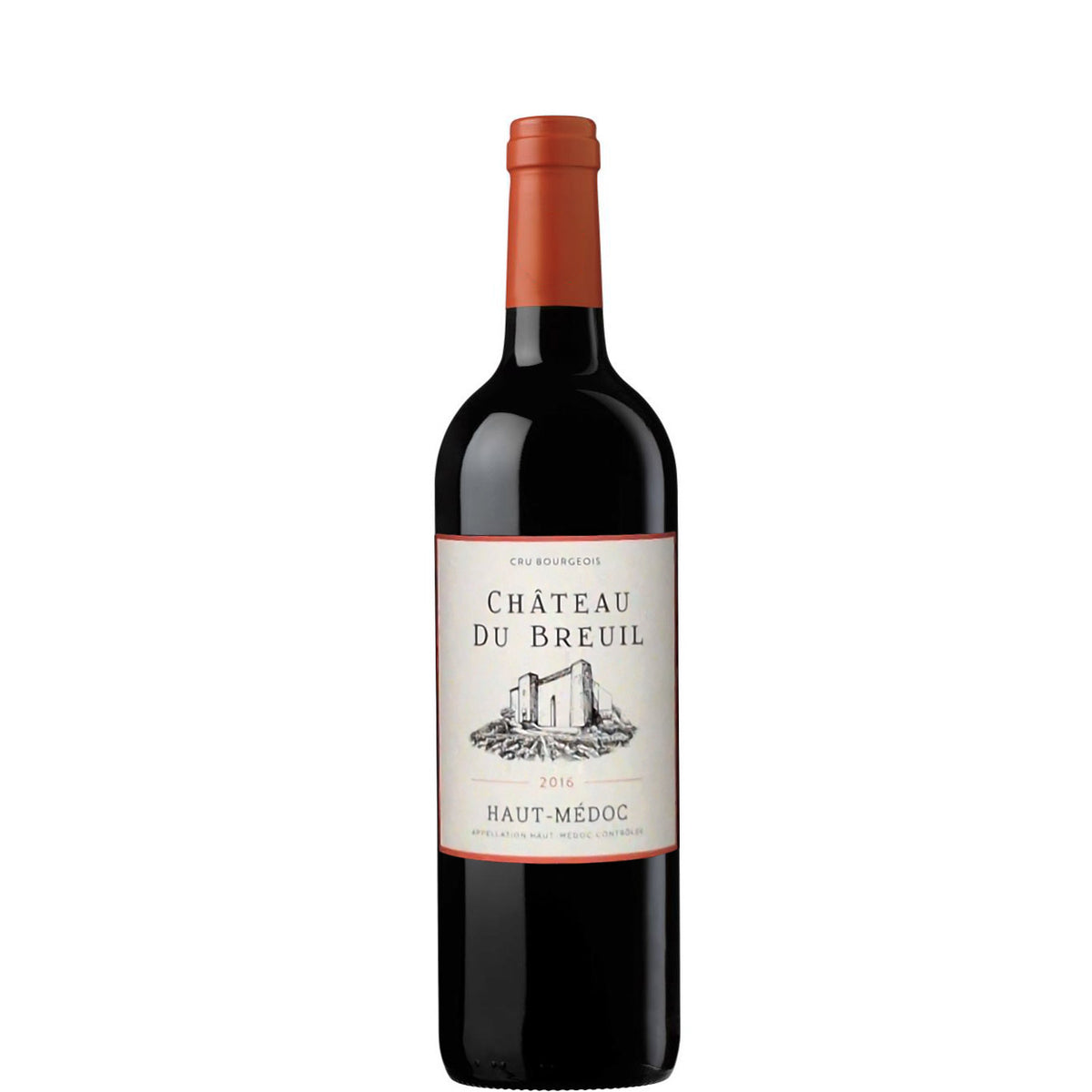
Château du Breuil, Haut Médoc Cru Bourgeois, 2016
Château du Breuil, Haut Médoc Cru Bourgeois, 2016
- 75cl
- 13.5%
- Red Still
- Cabernet Sauvignon, Merlot, Petit Verdot
Couldn't load pickup availability

Optimal drinking window: 2026 - 2034
Château du Breuil sits in the Haut-Médoc, that broad sweep of appellation stretching from Blanquefort up to St-Estèphe, picking up classified-growth neighbours' gravel without ever quite borrowing their postcode or their prices. This is Cru Bourgeois country, where the wines trade grandeur for honesty, and 2016 was a vintage that rewarded exactly that kind of honesty with ripe, even tannins and real freshness.
In the glass this is classic claret thinking: blackcurrant and dark plum, cedar and a savoury waft of tobacco, built on a structure that's firm without being stern. Drink it now with real pleasure.
At ten years old, this wine is moving comfortably from its fruit-forward youth into a more settled, savoury middle age, with the cedar and tobacco notes now firmly established alongside the fruit. Expect further integration over the next few years as the tannins continue to soften and the wine takes on a gentle, leathery complexity. It should hold happily on this plateau until around 2034, after which the fruit will likely start to fade and the wine will lean increasingly on its earthier, more tertiary character.
Tasting Notes
AppearanceDeep garnet with a slight brick edge at the rim, showing its ten years honestly.
NoseBlackcurrant and damson give way to cedar, dried tobacco leaf and a faint whiff of graphite. There's a savoury, forest-floor lift developing underneath the fruit.
PalateMedium to full-bodied, with tannins that have softened into something velvety rather than gripping. Dark plum and cassis sit alongside a gentle earthiness, the whole thing carried by bright, well-judged acidity.
FinishLong, savoury and gently mineral, with a last flicker of cedar smoke.
Overall impressionA proper, honest Haut-Médoc claret now drinking in its prime.
Food Pairings
This is the wine Médoc families reach for with a Sunday gigot d'agneau, the lamb pink and the garlic slow-cooked into the juices. It's equally at home with entrecôte à la bordelaise, seared in butter and finished with a shallot and red wine reduction that practically shakes hands with the glass. Firmer cheeses like a nutty Comté or a well-aged Gouda work nicely too, as would a classic cassoulet on a cold evening. Locals wouldn't overthink it: good meat, slow cooking, and a bottle that's earned a bit of air beforehand.
We think this wine would go well with
Serve at 16-18°C, properly cool cellar temperature rather than warm room temperature, to keep the fruit lifted and the tannins in check. Decant for 30-45 minutes to let the wine shake off any bottle stink and open up its secondary notes. A classic Bordeaux glass, generously bowled, gives the aromatics room to breathe.
The vineyards are planted on the gravel-and-clay soils typical of the Haut-Médoc's better-drained slopes, with gravel mounds offering the natural drainage and heat retention that Cabernet Sauvignon craves. The maritime influence of the nearby Gironde estuary moderates extremes, giving long, even ripening seasons. These soils push vine roots deep in search of water and nutrients, concentrating flavour and lending the wine its characteristic gravelly, mineral edge.
Haut-Médoc is the broadest of the Médoc's appellations, running along the left bank from just north of Bordeaux city to the more celebrated communes of Margaux, St-Julien, Pauillac and St-Estèphe. It lacks the prestige (and price tag) of those inner appellations, but the better estates, particularly those classified Cru Bourgeois, can offer genuinely excellent, age-worthy claret at a fraction of the cost. Cru Bourgeois itself is a quality designation reassessed annually, sitting just below the 1855 Classified Growths but often punching well above its station.
The 2016 growing season in Bordeaux handed growers a masterclass in patience and precision. A sodden spring delayed flowering, then summer heat arrived just when the vines needed it most, followed by crucial September sunshine that allowed unhurried ripening. The Merlot on the Right Bank reached beautiful concentration, while the Cabernet Sauvignon across the Gironde had time to develop the structure that makes this vintage so compelling.
What emerged was a vintage of remarkable poise—wines with serious backbone but without the austerity that can make young Bordeaux forbidding. The tannins have grip without being harsh, the fruit has depth without being jammy, and there's an energy running through these wines that keeps them lively rather than ponderous. Most 2016s are drinking superbly now, showing their character whilst retaining plenty in reserve, and the better examples will reward cellaring until 2035 or beyond.
FAQs
What does this wine taste like?
Blackcurrant and plum fruit with cedar, tobacco and a savoury, graphite-like finish, carried on softening but still present tannins.
Is this wine ready to drink now?
Yes, it's drinking very well at ten years old, with the tannins nicely resolved, though it will happily hold until 2034.
What food should I pair it with?
Classic Bordeaux fare: roast lamb, entrecôte with a red wine sauce, or a firm, nutty cheese.
How should I serve it?
Serve at 16-18°C in a Bordeaux glass, and give it 30-45 minutes in a decanter to open up.
Is this wine worth cellaring further?
It's not essential, but patient drinkers will be rewarded with another few years of gentle development before it begins its decline.
What grapes are in this wine?
A classic Médoc blend led by Cabernet Sauvignon, with Merlot and a touch of Petit Verdot for spice and colour.
Explore related wines


What are you looking for tonight? Tell me the occasion, a grape, a region — or just try a suggestion below.
Your recommendations will appear here.
-
-
Speak to one of our Wine Gurus
Speak to a Wine GuruWith years of experience, our team can help you with all your wine buying and selling needs