

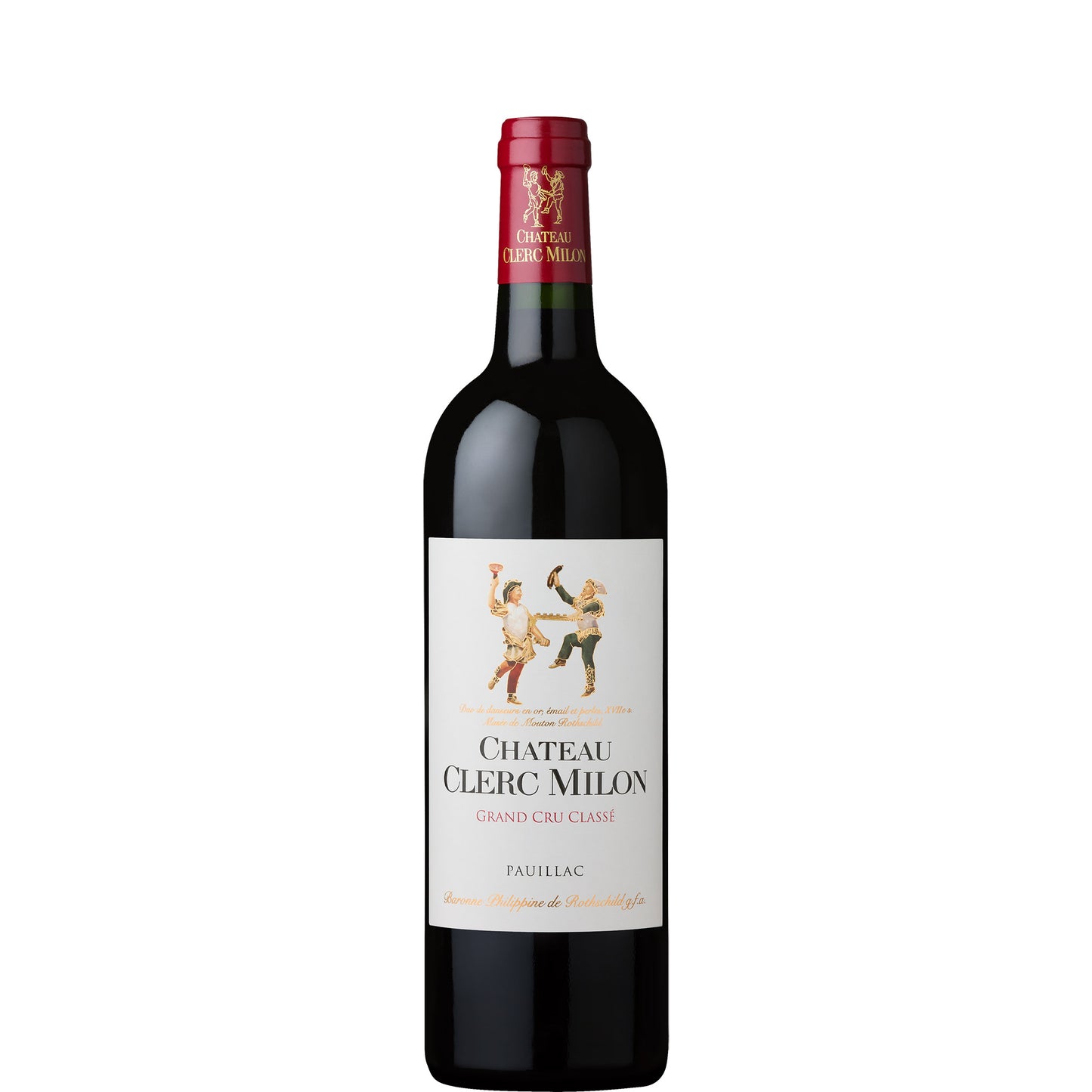
Château Clerc Milon, 2012
Château Clerc Milon, 2012
- 75cl
- 13.5%
- Red Still
- Cabernet Sauvignon, Merlot, Petit Verdot, Carménère, Cabernet Franc
Couldn't load pickup availability

Optimal drinking window: Now - 2035
About Château Clerc Milon, 2012
The Château Clerc Milon 2012 is a bold and beautifully structured Pauillac with deep red colour and a touch of violet. It’s full-bodied and intense, opening with juicy blackberry and liquorice flavours that are wrapped in smooth, velvety tannins. Despite its power, the wine maintains a perfect balance of richness and freshness, with a long, elegant finish that lingers with bright acidity and a subtle mineral edge.
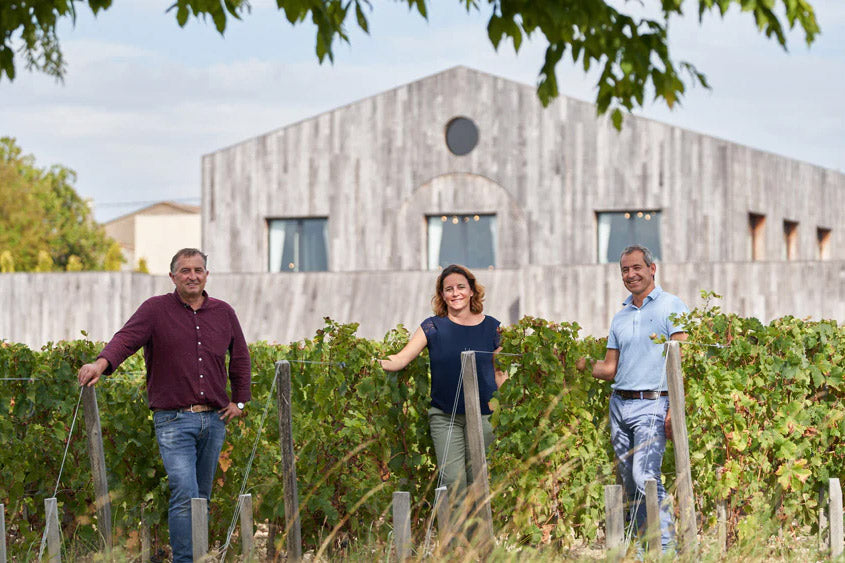
Château Clerc Milon sits in prime Pauillac territory, right next to its legendary First Growth neighbours, Mouton and Lafite Rothschild - you can spot their vines from the château’s terrace.
The estate's revival began in 1970, when Baron Philippe de Rothschild acquired the neglected property and set out to restore its reputation as a Classified Growth. His daughter, Baroness Philippine de Rothschild, carried on his vision, fully re-establishing Clerc Milon as a top-tier Pauillac estate that produces wines of exceptional quality and value.
The 2012 is at an interesting point right now — the primary fruit is still very much present and vibrant, but the tannins have softened just enough to make it genuinely enjoyable rather than a test of patience. Over the next three to four years, expect the dark fruit to begin integrating with the cedar, tobacco, and graphite that are already lurking underneath, and the wine should reach a real plateau of complexity somewhere around 2028 to 2032. That window is likely when Clerc Milon 2012 will be at its most compelling — the power balanced by secondary flavours, the structure intact but no longer dominant. Well-stored bottles should hold comfortably until 2038, and exceptional examples may surprise even beyond that, though the fruit will gradually give way to more tertiary, savoury character. If you are opening one now, do give it plenty of air.
What the critics say:
"The 2012 Clerc Milon is dark, bold and exuberant in the glass. Plums, black cherries, tobacco and graphite are all pushed forward. Even with its considerable creaminess and overall depth, the 2012 has plenty of tannin lurking underneath, so readers would be well served cellaring the wine for at least a few years."
"This is lovely, with enticing floral aromatics. This was the point that Clerc Milon was beginning to stand out, with later picking and more careful work in vineyard and cellar, and I'm thrilled to see it perform so well at 10 years on. Touch of fennel and sage, with wild spices and herbs, whether from carmanere influence, or simply its distinctive soils. Clear power, with blueberry, red cherry, cassis, loganberry, fine but present tannins and a salted caramel finish. You can start drinking this now, but it will soften further. One to recommend, good persistency also."
Tasting Notes
AppearanceDeep ruby with a darkening core and a faint violet edge that hints at the wine's relative youth.
NoseBlack plum, dark cherry, and cassis lead, with a curl of graphite and tobacco underneath. There is a distinctive lift of wild herbs and fennel — likely the Carménère influence — that gives Clerc Milon its particular character among Pauillac peers. With air, a touch of blueberry and dried violets emerges.
PalateFull-bodied and concentrated, with blackberry and loganberry fruit that feels ripe but not overworked. The tannins are present and firm without any roughness, and there is a genuine freshness running through the mid-palate that keeps the wine from feeling heavy. A suggestion of salted caramel on the back end adds an unexpected but pleasing warmth.
FinishLong, mineral, and savoury, with bright acidity that lingers well after the fruit has faded.
Overall impressionA wine of real density and ambition, wearing its Fifth Growth classification lightly.
Food Pairings
In the Médoc, this is exactly the kind of wine poured alongside a slow-roasted rack of Pauillac lamb — the local breed is genuinely famous here, and the earthy, herbal richness of the meat is a natural counterpart to the wine's graphite and dark fruit. A classic entrecôte bordelaise, with shallots and bone marrow, would work brilliantly too. Further afield in the regional tradition, a duck confit with Sarladaise potatoes, or a Périgueux sauce-dressed fillet of beef, would hold their own against the wine's structure. Aged hard cheeses, particularly Comté at its most nutty and mature, make an excellent final pairing if you want to stretch the last glass into the evening.
We think this wine would go well with
Serve at around 17-18°C — any warmer and the alcohol starts to dominate, any cooler and the tannins close up. Decanting is strongly recommended: pour into a wide-bowled decanter at least 90 minutes before serving to allow the wine to open properly and shed any slight reduction it may have picked up in bottle. A large Bordeaux-format glass will give the wine the space it needs to show its aromatic complexity.
Clerc Milon's vineyards sit on the Plateau de Mousset in the northern Médoc, immediately adjacent to Mouton Rothschild and Lafite Rothschild — close enough that you can see their vine rows from the terrace. The soils are classic Pauillac: deep beds of Günzian gravel over a clay-limestone subsoil, which forces the vines' roots deep and restricts yields naturally. This combination of excellent drainage and heat retention from the gravel gives the wines their characteristic density and concentration, while the proximity to the Gironde estuary moderates temperature extremes across the growing season. A small parcel of Carménère, a rarity in Bordeaux today, adds an aromatic wildness that distinguishes Clerc Milon from many of its neighbours.
Pauillac is the most celebrated commune in the Médoc, home to three of Bordeaux's five First Growths — Lafite, Latour, and Mouton Rothschild — as well as eighteen other classified estates. The appellation produces wines of exceptional structure and longevity, built around Cabernet Sauvignon on its famous gravel mounds, with power and precision as the signature rather than the more approachable plushness of nearby Saint-Julien. The rules follow standard Médoc AOC regulations, but it is the combination of deep gravel soils, strong Gironde influence, and accumulated winemaking heritage that makes Pauillac a category apart. Compared to Margaux, the wines are less perfumed and more austere in youth; compared to Saint-Estèphe, they tend to be more polished and consistent in warm years.
The 2012 growing season in Bordeaux threw every curveball imaginable at the vignerons. Spring arrived with biblical rains that had growers reaching for their wellies more often than their secateurs, followed by a damp summer that kept everyone on edge about disease pressure. Just when despair was setting in, September delivered one of those glorious Indian summers that transforms everything—warm, dry days that allowed the late-ripening Cabernet Sauvignon to catch up and develop proper flavour concentration. The harvest stretched well into October, with only the most patient producers reaping the rewards.
What emerged was a vintage of surprises rather than superlatives. The Merlot-dominant Right Bank fared better than expected, producing wines with lovely freshness and accessible fruit that never feels forced or overextracted. The Left Bank required more careful selection, but the best châteaux crafted wines with genuine personality—less muscular than the powerhouse years, but with a kind of understated charm that grows on you. These aren't wines for the cellar conquistadors, but they're drinking beautifully now and will continue to reward patient drinkers for another decade.
FAQs
What does Château Clerc Milon 2012 taste like?
It is a big, structured Pauillac — dark plum, cassis, blueberry, and a distinctive herbal lift from its rare Carménère vines, with graphite and tobacco running through the mid-palate. The tannins are firm but smooth, and a salted caramel note on the finish gives it a warmth that sets it apart from more austere Médoc neighbours.
When should I drink this wine?
It is approachable now, particularly with 90 minutes of decanting, but the best drinking is still ahead. We would aim for the window between 2028 and 2038, when the fruit and secondary complexity should be in perfect balance. Well-stored bottles will hold until 2040 and potentially beyond.
Is it worth cellaring?
Yes, without question. The 2012 has the structure, acidity, and depth to age gracefully for another decade or more. If you have the patience and the storage, holding until 2028 at the earliest will be rewarded with considerably more complexity than you would get opening it today.
What food should I serve with it?
Classic Bordeaux pairings work best: roast rack of lamb, entrecôte bordelaise, or duck confit. The wine's weight and structure mean it can handle rich, fatty cuts without being overwhelmed. Aged Comté or similar hard cheeses make an excellent match if you want to carry the bottle into a cheese course.
How should I serve it?
Serve at 17-18°C in a large Bordeaux glass. Decant for at least 90 minutes — this wine genuinely needs the air to open up and show its best. Straight from the bottle it can feel a touch tight and closed.
How does Clerc Milon compare to its neighbours Mouton and Lafite?
Those are two of Bordeaux's First Growths, so the comparison is a little uneven on price, but Clerc Milon punches well above its Fifth Growth classification. It shares Mouton's bold, concentrated style rather than Lafite's more restrained elegance, and at a fraction of the price it offers one of the better value propositions in the Médoc. The shared management under the Rothschild portfolio has brought the winemaking close to First Growth standards without the First Growth price tag.
Explore related wines


What are you looking for tonight? Tell me the occasion, a grape, a region — or just try a suggestion below.
Your recommendations will appear here.
-
-
Speak to one of our Wine Gurus
Speak to a Wine GuruWith years of experience, our team can help you with all your wine buying and selling needs