

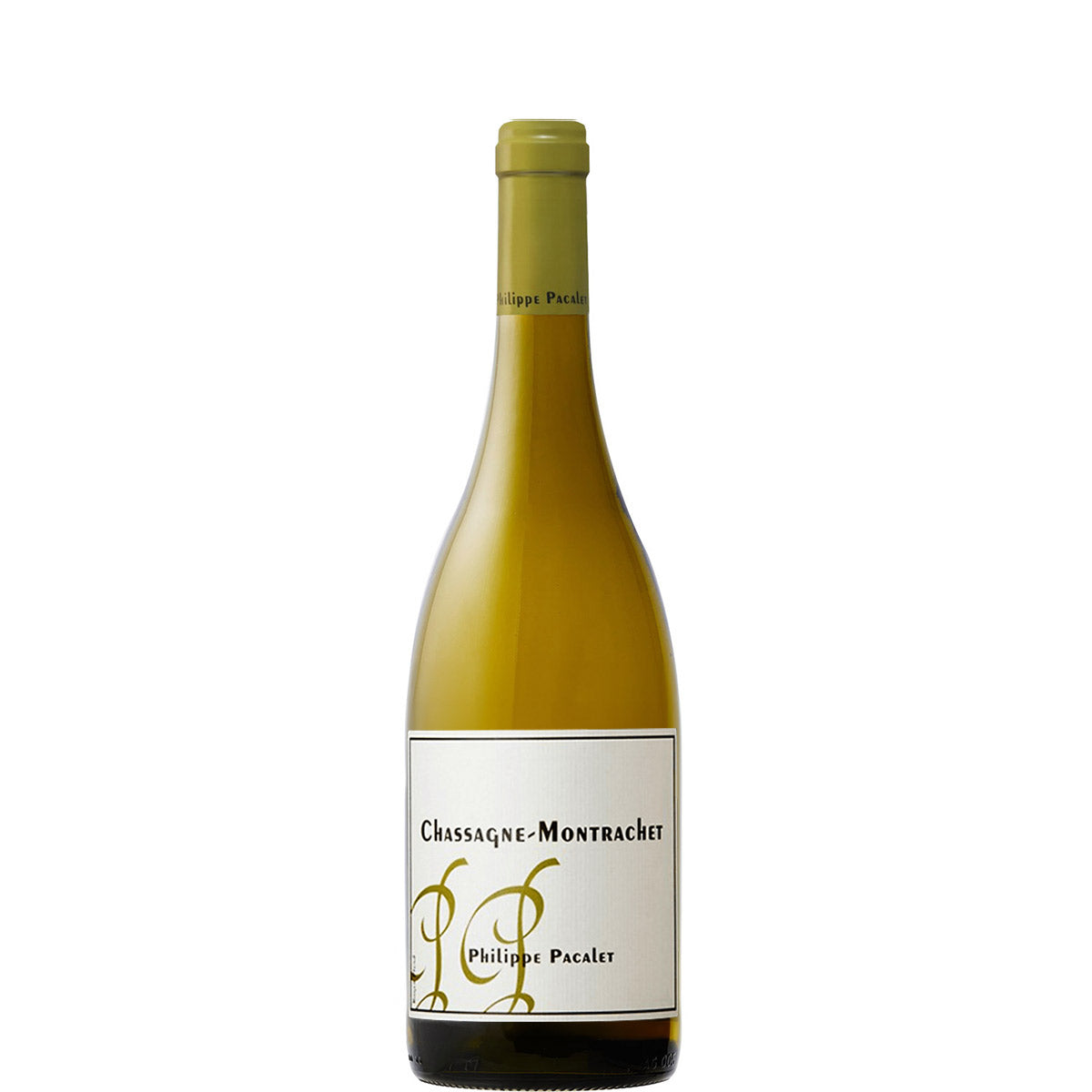
Chassagne-Montrachet Premier Cru 'Morgeot', Philippe Pacalet, 2024
Chassagne-Montrachet Premier Cru 'Morgeot', Philippe Pacalet, 2024
- 75cl
- 13%
- White Still
- Chardonnay
- Organic
- Biodynamic
Couldn't load pickup availability

Optimal drinking window: 2028 - 2038
Philippe Pacalet is one of Burgundy's most quietly radical figures — a négociant-éleveur who trained under Marcel Lapierre and brings the same natural-wine rigour to white Burgundy that Lapierre applied to Beaujolais. His Chassagne-Montrachet 'Morgeot' comes from one of the appellation's great premier cru sites: a south-southeast-facing slope with limestone-rich soils that give the wine a particular stony, almost saline backbone. Pacalet works without fining, with minimal sulphur, and favours whole-cluster pressing and long, unhurried elevage in old oak. The result is white Burgundy that feels alive rather than polished.
"2 barrels. From the heart of the vineyard. Slight reduction on the nose. Rich, generous fruit with good weight on the palate."
Nathan Hill, Chairman
Philippe was clear that while yields were historically low, the payoff is in the glass. Aromatic clarity, saline finishes and finely judged tannins run through the range, and the wines show real charm already alongside the structure to age. A year where selection mattered enormously, and in Pacalet’s hands, the results are compelling.
Philippe Pacalet is one of Tim Atkin's 2024 Top 15 Négociants & Cooperatives.
What the critics say:
Morgeot is the largest and arguably most storied premier cru in Chassagne-Montrachet, occupying a gently sloping, south-southeast-facing flank at around 260-300 metres altitude. The soils are predominantly Bathonian limestone with significant clay content, which gives the wines their characteristic weight and grip without sacrificing the stony, mineral cut that distinguishes Chassagne from its richer neighbour Puligny. The aspect provides reliable sun exposure while the elevation preserves freshness — essential in a warming climate, and particularly visible in a cool year like 2024.
Chassagne-Montrachet is a village on the southern edge of the Côte de Beaune, sharing the fame of the grand cru Le Montrachet with Puligny to its north. While Puligny tends towards elegance and precision, Chassagne has historically offered more texture and earthiness in its whites — broader-shouldered, with a flint-and-stone quality that can be initially austere. Its premier crus are numerous and variable in character; Morgeot, on the warmer southern end of the appellation, is among the most structured and age-worthy. All wines here must be 100% Chardonnay.
The 2024 growing season in Burgundy was, frankly, a test of nerve. A wet spring brought significant mildew pressure, and vignerons who stayed sharp in the vineyard — working fast, keeping canopies open, reducing yields where necessary — came out the other side with something worth talking about. Summer brought warmer, drier conditions that helped the fruit recover composure, and harvest arrived broadly on the later side, with growers picking carefully to find phenolic ripeness without sacrificing freshness. Quantity was down across much of the Côte, which concentrates minds as much as it concentrates wine.
What emerged is a vintage that rewards those who put the work in. The Pinots we have tasted carry real precision and translucency — not because they are light, but because the acidity is lively and the fruit unforced. Chardonnays from the Côte de Beaune look particularly promising: taut, mineral, with genuine length. This is not a vintage to panic-open. Most village and premier cru reds want three to five years at minimum, with the better appellations drinking well until 2035 and beyond. The whites are more approachable now, though the best will reward patience too.

Explore related wines


-
-
Speak to one of our Wine Gurus
Speak to a Wine GuruWith years of experience, our team can help you with all your wine buying and selling needs