

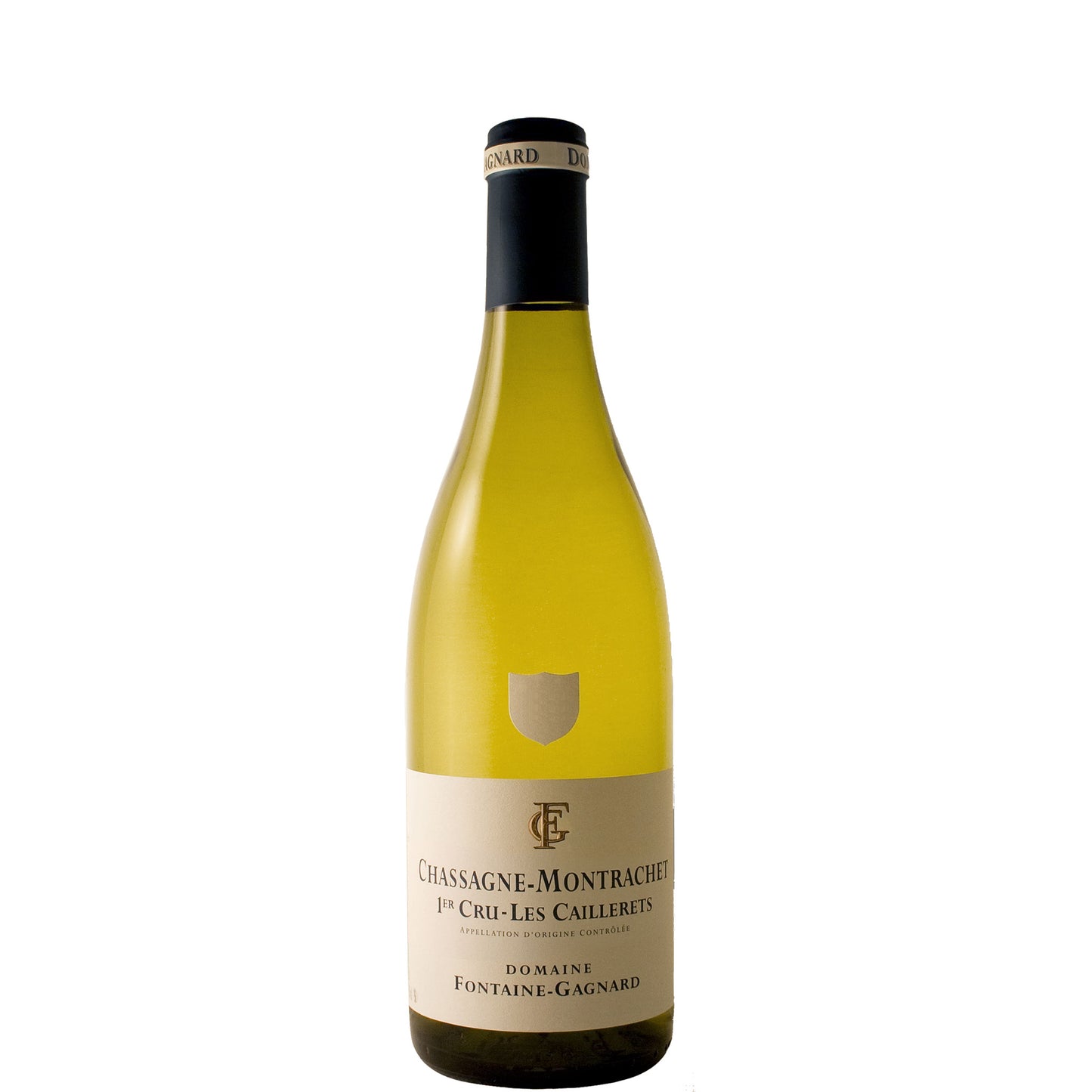
Chassagne-Montrachet Premier Cru 'Les Caillerets', Domaine Fontaine-Gagnard, 2024
Chassagne-Montrachet Premier Cru 'Les Caillerets', Domaine Fontaine-Gagnard, 2024
- 75cl
- 13.5%
- White Still
- Chardonnay
- Organic
Couldn't load pickup availability

Optimal drinking window: 2028 - 2040
Les Caillerets is one of Chassagne-Montrachet's most compelling premiers crus — a vineyard that sits just below the great Montrachet itself, and it behaves accordingly.
Fontaine-Gagnard is one of Chassagne’s great traditionalists, quietly producing some of the appellation’s most complete and age-worthy wines. Farming is resolutely old-school rather than dogmatic, with a focus on balance, density and longevity over fashion. In 2024, that restraint mattered.
The vintage was hard work. High mildew pressure, early harvest beginning on 22 August, and naturally low yields around 35 hl/ha for whites and 30 for reds. A hot August pushed ripeness quickly, but September brought dilution and freshness back into play, finishing around pH 3.3–3.4. The result is a vintage of crunchy acidity, dense fruit and classical proportions, more ripe than 2013, closer in spirit to 2010, though Burgundy has changed too much for lazy comparisons.
"Highly mineral and green-tinged aromatics. Stone fruit, flint and a finely prickly texture, with restraint rather than overt generosity. Serious and structured."
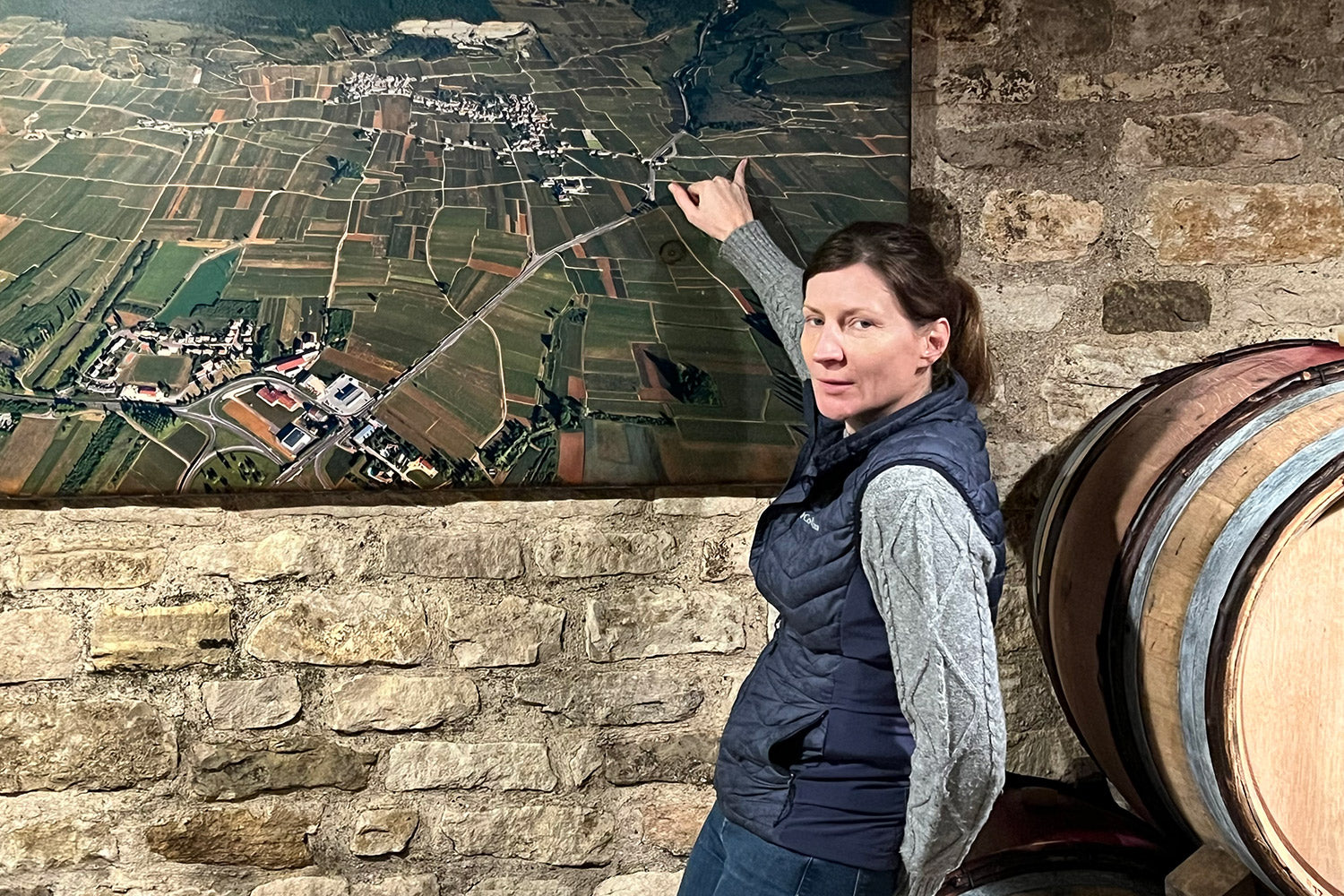
Ksenia Pashkova, Club Merchandiser
From around 2028, the stony, chalky mineral character should begin to integrate fully with the fruit, and the hazelnut and brioche notes that come with age in good Chassagne should start to emerge. The window of peak drinking is probably 2029 to 2036, when fruit, texture, and mineral complexity will all be in balance.
Domaine Fontaine-Gagnard is one of Tim Atkin's 2024 Top 10 Côte de Beaune White Wine Producers.
What the critics say:
"Pretty, smoky uplift denotes some reduction on the nose. The palate is replete with sweet yellow plums and currants accented by ginger, leesiness and fresh cream. The finish seems to go on forever. The domaine owns two 60-year-old parcels here in Chassagne’s largest— and arguably one of its best—Premier Crus."
"The 2024 Chassagne-Montrachet Les Caillerets 1er Cru was taken from tank after 11 months in barrel with one-third new oak. This has impressive presence on the nose with lemon curd, hazelnut and crushed stone notes. The palate is lively on the entry with a keen thread of acidity that maintains tension throughout. Nicely focused, this feels reassuringly elegant on the finish with impressive persistence. As good as the 2023, possibly better."
Tasting Notes
AppearancePale gold with a faint green tinge, bright and clear in the glass.
NoseRestrained and precise: white peach, pear skin, and acacia blossom over a cool thread of chalk and wet stone. There is a subtle hazelnut quality that hints at real depth to come, though everything is still tightly coiled.
PalateThe 2024 vintage has given this real nervous energy — the acidity is vivid and linear, framing flavours of citrus zest, green apple, and almond paste. It is not a wine of obvious richness; instead there is a compactness and precision that feels very true to the site.
FinishLong and saline, with a flinty, almost electric persistence that lingers well past what the wine's restraint might suggest.
Overall impressionA serious, site-driven white Burgundy that is flattering nobody right now — but give it time, and it will be remarkable.
Food Pairings
In Burgundy, a wine like this would be poured alongside écrevisses à la nage — freshwater crayfish in a lightly creamed court-bouillon — where the wine's mineral edge cuts through the richness without overwhelming the delicacy of the shellfish. Locals might also reach for it with a slice of comté aged eighteen months or more, the nutty, crystalline quality of the cheese meeting the wine's hazelnut notes in a very satisfying way. Quenelles de brochet, the classic pike dumplings with sauce Nantua, is another Burgundian pairing that makes a compelling case for why the region grows Chardonnay at all. Simpler meals of roast chicken with tarragon and a little cream would be equally at home here.
We think this wine would go well with
Serve at 11-13°C — cold enough to preserve the wine's freshness but not so cold that you shut down the complexity that is beginning to emerge. No need to decant; simply open the bottle twenty minutes before serving to allow it to breathe gently in the glass. A large-bowled white Burgundy glass, such as a Burgundy Grand Cru shape from Zalto or Riedel, will give the aromas room to open without letting the wine warm too quickly.
Les Caillerets lies on the upper slopes of Chassagne-Montrachet, at around 280-310 metres, where thin, stony soils over Jurassic limestone give very little for the vine to work with — which is, of course, exactly the point. The lack of depth forces roots deep into the rock, and the result is wines with a characteristic stony, almost saline mineral quality that sets them apart from the richer, more clayey soils lower on the slope. Aspect is east to southeast, giving good morning sun without the heat stress that can affect lower parcels in warm vintages.
Chassagne-Montrachet is perhaps best known as the village that shares its name with Le Montrachet, Burgundy's most celebrated white wine vineyard — though it shares that grand cru with Puligny to the north. The appellation covers both red and white wines, though its whites, built on limestone and marl, are what drive the domaine's reputation. Premiers crus here vary considerably in style depending on altitude and exposure; Les Caillerets, high on the slope, is among the most mineral and age-worthy of them. Compared to Puligny-Montrachet, Chassagne whites tend to be slightly broader and more textural, though the best premiers crus like Caillerets blur that distinction considerably.
The 2024 growing season in Burgundy was, frankly, a test of nerve. A wet spring brought significant mildew pressure, and vignerons who stayed sharp in the vineyard — working fast, keeping canopies open, reducing yields where necessary — came out the other side with something worth talking about. Summer brought warmer, drier conditions that helped the fruit recover composure, and harvest arrived broadly on the later side, with growers picking carefully to find phenolic ripeness without sacrificing freshness. Quantity was down across much of the Côte, which concentrates minds as much as it concentrates wine.
What emerged is a vintage that rewards those who put the work in. The Pinots we have tasted carry real precision and translucency — not because they are light, but because the acidity is lively and the fruit unforced. Chardonnays from the Côte de Beaune look particularly promising: taut, mineral, with genuine length. This is not a vintage to panic-open. Most village and premier cru reds want three to five years at minimum, with the better appellations drinking well until 2035 and beyond. The whites are more approachable now, though the best will reward patience too.
FAQs
What does this wine taste like?
Taut and mineral rather than rich or buttery. Think white peach, citrus zest, crushed stone, and almond, with a saline, focused finish. It is a wine of precision and length — the pleasure is in its architecture, not its generosity.
When should I drink this wine?
Patience will be well rewarded here. The 2024 vintage is naturally high in acidity and the wine is tightly wound right now. We would suggest waiting until at least 2028, with the sweet spot running from around 2029 to 2036. Well-stored bottles should hold comfortably until 2040.
Is this worth cellaring?
Absolutely, if you have the space and the patience. Les Caillerets is one of Chassagne's most age-worthy premiers crus, and Fontaine-Gagnard's handling of the site is serious. The 2024 vintage, with its cool growing season and bright acidity, is built to last. This is not a wine to open early out of curiosity.
What food should I serve with this?
Classic Burgundian pairings work brilliantly: crayfish or lobster in a light cream sauce, aged comté, quenelles de brochet, or roast chicken with tarragon. The wine's mineral edge makes it particularly good with seafood and dishes where a touch of richness needs cutting through.
How should I serve it?
Serve at 11-13°C in a large-bowled white Burgundy glass. No need to decant — just open the bottle twenty minutes before pouring and let it breathe in the glass. Avoid serving it too cold, which will mask the complexity that makes this wine worth the money.
How does Les Caillerets compare to other Chassagne premiers crus?
Caillerets sits high on the slope, close to the Puligny border, and shows more tension and mineral precision than the richer, fuller-bodied premiers crus lower on the hill such as Morgeot. It is among the most Puligny-like of the Chassagne premiers crus — focused, stony, and built for ageing — which is part of what makes it so exciting.
Explore related wines


What are you looking for tonight? Tell me the occasion, a grape, a region — or just try a suggestion below.
Your recommendations will appear here.
-
-
Speak to one of our Wine Gurus
Speak to a Wine GuruWith years of experience, our team can help you with all your wine buying and selling needs