

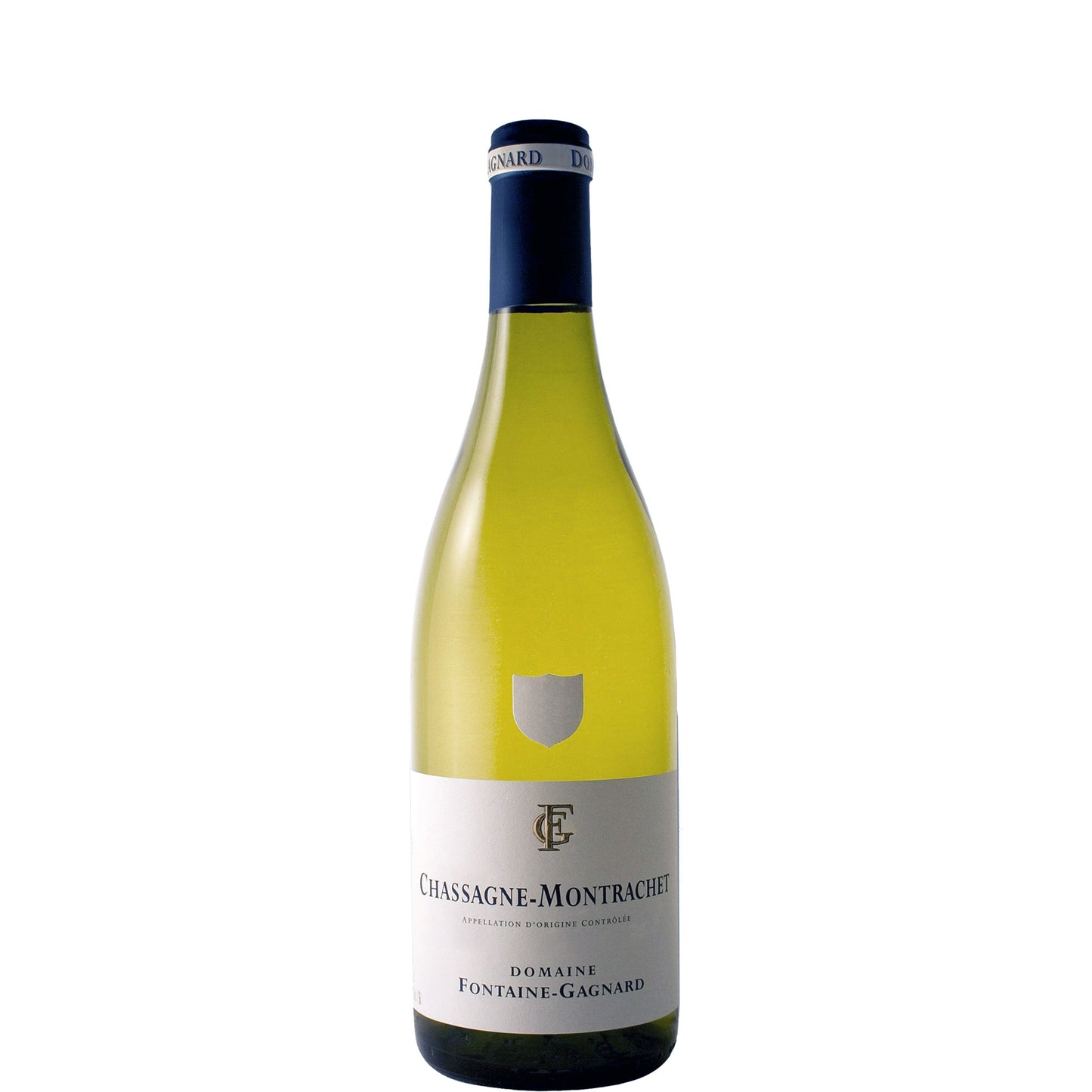
Chassagne-Montrachet, Domaine Fontaine-Gagnard, 2024
Chassagne-Montrachet, Domaine Fontaine-Gagnard, 2024
- 75cl
- 13%
- White Still
- Chardonnay
- Organic
Couldn't load pickup availability

Optimal drinking window: 2026 - 2035
"From six plots, just 6–700 bottles made. Apple and lemon on the nose, lean, linear and floral on the palate with subtle oak influence. Poised and quietly persistent."
Ksenia Pashkova, Club Merchandiser
Fontaine-Gagnard is one of Chassagne’s great traditionalists, quietly producing some of the appellation’s most complete and age-worthy wines. Farming is resolutely old-school rather than dogmatic, with a focus on balance, density and longevity over fashion. In 2024, that restraint mattered.
The vintage was hard work. High mildew pressure, early harvest beginning on 22 August, and naturally low yields around 35 hl/ha for whites and 30 for reds. A hot August pushed ripeness quickly, but September brought dilution and freshness back into play, finishing around pH 3.3–3.4. The result is a vintage of crunchy acidity, dense fruit and classical proportions, more ripe than 2013, closer in spirit to 2010, though Burgundy has changed too much for lazy comparisons. Oak remains measured at around 20% for village wines and 30% for premiers and grands crus.
This is village-level Chassagne, which means no single-vineyard fanfare, but also no compromises: the fruit is estate-grown, the winemaking unhurried, and the result is exactly what you want from this address at this level.
Domaine Fontaine-Gagnard is one of Tim Atkin's 2024 Top 10 Côte de Beaune White Wine Producers.
What the critics say:
"€: Value wines that are especially worth seeking out"
Tasting Notes
AppearancePale gold with a faint green tint and clear, bright clarity.
NoseFresh and precise, with green apple, white peach, and a lick of warm hazelnut. There is a stony, almost chalky quality underneath that is very much Chassagne rather than anywhere else. With a few minutes in the glass, a little cream and light citrus peel emerge.
PalateThe 2024 vintage has given this real lift and precision — the acidity is bright without being sharp, and the mid-palate has enough weight to feel generous without tipping into heaviness. White stone fruit, a squeeze of lemon, and that characteristic saline, mineral edge that runs all the way through. Oak is present but plays a supporting role, adding texture rather than flavour.
FinishClean and persistent with a stony, slightly saline quality that lingers long after the glass is set down.
Overall impressionA textbook village Chassagne with the precision of a good vintage and the quiet confidence of a domaine that knows exactly what it is doing.
Food Pairings
In Chassagne and the surrounding villages, this style of wine finds its natural home at the table alongside simple, honest cooking that does not compete with the wine's mineral precision. Roast chicken with tarragon and crème fraîche is a classic pairing — the cream softens the wine's acidity while the herbs echo its savoury edge. Aged Comté or Beaufort cheese is another local instinct, the nuttiness of the wine finding its mirror in the cheese. River fish, particularly trout or pike perch with a beurre blanc, is a regional staple that works extremely well. A simple gratin dauphinois, golden and bubbling, is perhaps the most honest and satisfying match of all.
We think this wine would go well with
Serve at 11-13°C — cold enough to feel fresh but warm enough to let the mineral and stone fruit character open up properly. No need to decant, though 15-20 minutes in the glass will do it a world of good. A wide-bowled white Burgundy glass is ideal, giving the wine enough room to breathe without losing its aromatic focus.
Chassagne-Montrachet sits at the southern end of the Côte de Beaune, where the limestone and marl bedrock is ideal for Chardonnay — providing the mineral backbone that distinguishes the appellation from its richer northern neighbours. Village-level parcels tend to sit slightly lower on the slope, with heavier soils that give a little more weight than the premier and grand crus above. The climate is continental, with cold winters and warm summers tempered by altitude and aspect, and 2024 brought a cooler, wetter season that emphasised freshness and acidity across the appellation.
Chassagne-Montrachet AOC covers the southernmost section of the Côte de Beaune and is home to some of Burgundy's greatest white wines, including the grands crus Montrachet, Bâtard-Montrachet, and Criots-Bâtard-Montrachet. At village level, the appellation produces Chardonnay of real character: typically more savoury and mineral than neighbouring Puligny, with a nutty, almost earthy quality that develops beautifully with age. The village also produces red wine from Pinot Noir, though white accounts for the lion's share of its fame. Village AOC wines must reach a minimum of 11% ABV and are sourced from approved plots within the commune's boundaries.
The 2024 growing season in Burgundy was, frankly, a test of nerve. A wet spring brought significant mildew pressure, and vignerons who stayed sharp in the vineyard — working fast, keeping canopies open, reducing yields where necessary — came out the other side with something worth talking about. Summer brought warmer, drier conditions that helped the fruit recover composure, and harvest arrived broadly on the later side, with growers picking carefully to find phenolic ripeness without sacrificing freshness. Quantity was down across much of the Côte, which concentrates minds as much as it concentrates wine.
What emerged is a vintage that rewards those who put the work in. The Pinots we have tasted carry real precision and translucency — not because they are light, but because the acidity is lively and the fruit unforced. Chardonnays from the Côte de Beaune look particularly promising: taut, mineral, with genuine length. This is not a vintage to panic-open. Most village and premier cru reds want three to five years at minimum, with the better appellations drinking well until 2035 and beyond. The whites are more approachable now, though the best will reward patience too.
FAQs
What does this wine taste like?
Think green apple, white peach, and hazelnut with a saline, stony edge that is very much Chassagne in character. The 2024 vintage has given it bright, precise acidity and a clean, focused finish. It is structured rather than opulent — this is not a showy wine, but a very satisfying one.
What food should I pair with this?
Roast chicken with tarragon and crème fraîche is a reliable go-to. Aged Comté or Beaufort cheese, river fish with a beurre blanc, or a gratin dauphinois will all work well. The key is not to overpower the wine's mineral precision with anything too heavy or heavily spiced.
How should I serve it?
Serve at 11-13°C in a wide-bowled white Burgundy glass. No need to decant, but give it 15-20 minutes in the glass to open up before drinking. Straight from the fridge it will feel tight and closed.
Is this worth cellaring?
Yes, for a few years at least. Village Chassagne from a reliable producer like Fontaine-Gagnard has enough structure and mineral depth to reward patience. The sweet spot is likely 2028-2031, though if you can resist until then is, of course, another matter entirely.
How does Fontaine-Gagnard compare to other Chassagne producers?
Fontaine-Gagnard sits firmly in the upper tier of the village without the stratospheric prices of the very top names. The wines are precise, classically made, and consistent — you are not buying hype, you are buying honest, well-grown Chardonnay from a family who have been doing this for generations. At village level in particular, the quality-to-price ratio is very compelling.
Explore related wines


What are you looking for tonight? Tell me the occasion, a grape, a region — or just try a suggestion below.
Your recommendations will appear here.
-
-
Speak to one of our Wine Gurus
Speak to a Wine GuruWith years of experience, our team can help you with all your wine buying and selling needs