

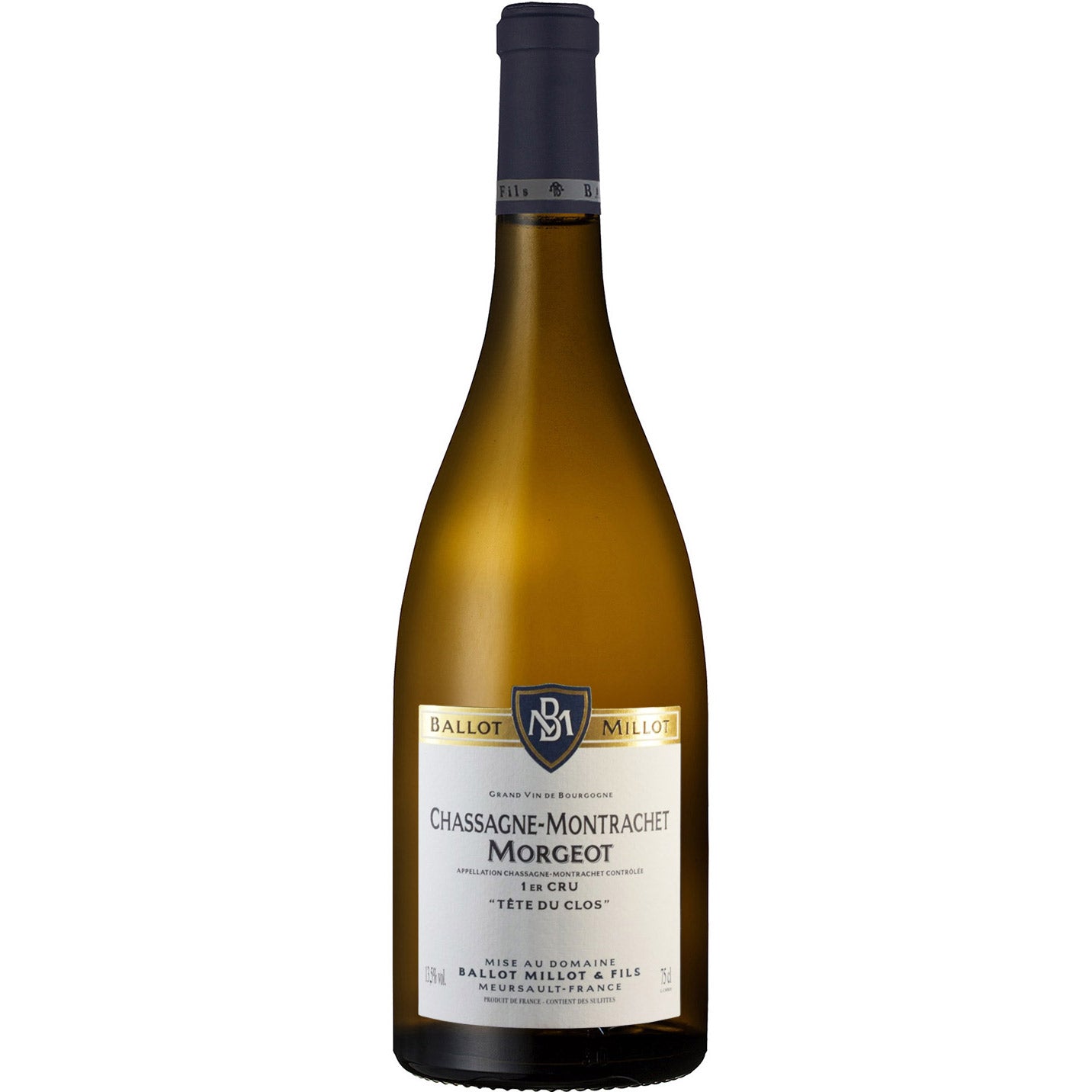
Chassagne-Montrachet Premier Cru 'Morgeot', Domaine Ballot-Millot, 2020 - Magnum
Chassagne-Montrachet Premier Cru 'Morgeot', Domaine Ballot-Millot, 2020 - Magnum
- 150cl
- 13.5%
- White Still
- Chardonnay
- Organic
Couldn't load pickup availability

Optimal drinking window: Now - 2038
Ballot-Millot’s 2020 Morgeot is a beautifully composed Chassagne. The palate is generous and silky, showing the warmth of the year, but anchored by a firm mineral backbone typical of Morgeot’s clay-limestone soils. There’s both breadth and precision; succulent fruit, fine acidity, and a long, gently spicy finish.
A Premier Cru that’s already approachable but has the structure to develop further complexity over the next decade.
Domaine Ballot-Millot, now under the skilled stewardship of the 17th-generation vintner Charles Ballot, remains one of Meursault’s leading estates.
Charles farms the vineyards organically, whilst in the cellar, he follows the lunar cycle, allowing nature's rhythms to guide his winemaking. His guiding principle is let the terroir do the talking, and the wines are always beautifully expressive and elegant.
Right now, in 2026, the wine sits in a pleasingly accessible phase: the primary fruit is generous, the oak well integrated, and the finish already showing that mineral persistence that defines good Morgeot. Over the next three to four years, the stone fruit will gradually give way to more secondary characters — toasted nuts, beeswax, a gentle honeyed richness — as the wine moves into its more complex middle phase. The magnum format will slow this evolution meaningfully, so expect the peak to arrive somewhere between 2030 and 2035, with the wine holding well until 2038 in a good cellar. After that point, the fruit may start to fade and the acidity could begin to feel angular, so resist the temptation to push it further than you need to.
What the critics say:
"Crumbly white soil. White-flower aromas. What an elegant Morgeot. Fruity, with sapidity and lively intensity. Well-defined palate, with cool freshness and crisp edges."
Tasting Notes
AppearancePale gold with a bright, luminous rim that catches the light cleanly.
NoseWhite peach, ripe pear, and hawthorn blossom open first, followed by a cool seam of chalk dust and a whisper of toasted almond from the oak. The warmth of 2020 is there in the generosity of the fruit, but it never tips into heaviness — there's a white-flower delicacy that keeps things lifted and precise.
PalateSilky in texture but with real definition, the 2020 vintage lends a broad, generous mid-palate of stone fruit and a subtle creaminess, while the Morgeot clay-limestone soils provide the firm mineral backbone that stops it from being merely soft. Acidity is lively without being sharp, giving the wine excellent focus and a cool freshness through the mid-palate that Sarah Marsh described as crisp-edged — and she is absolutely right.
FinishLong, gently spicy, and persistently mineral, with a saline, almost oyster-shell quality on the very end that is the hallmark of Chassagne at its most serious.
Overall impressionA magnum of this calibre in 2020 is exactly the kind of wine you buy now and open at Christmas ten years from now with a very good excuse.
Food Pairings
In Burgundy, a white of this weight and mineral precision would traditionally find its match at the table with a poulet de Bresse à la crème — the rich, tarragon-scented cream sauce a perfect foil for the wine's acidity and body. Locals might also reach for a gratinée d'écrevisses, crayfish gratin being one of the Côte d'Or's great old-fashioned pairings with serious white Burgundy. A well-aged Comté cheese, nutty and crystalline, is another natural partner, playing to the almond and mineral notes in the wine rather than fighting them. For something simpler but no less apt, a roast guinea fowl with butter and thyme would be just the thing on a Sunday in Chassagne.
We think this wine would go well with
Serve at 12-13°C — cold enough to preserve freshness, warm enough to let the texture and mineral complexity open up in the glass. In a magnum, the wine may need a good 20-30 minutes in the glass before it fully reveals itself, so pour early and be patient. No need to decant unless the wine has been stored cold, in which case a brief chamber to temperature is all it requires. A large-bowled white Burgundy glass — Zalto Burgundy or Riedel Montrachet — will do the most justice to the nose and palate.
Morgeot is one of Chassagne-Montrachet's largest and most storied premier cru lieux-dits, sitting on the southern flank of the village where clay-limestone soils give the wines a slightly fuller, more textural character than those from the cooler northern end of the appellation. The clay content provides generous body and weight, while the limestone drives the mineral precision and acidity that keeps Morgeot honest. Vines here benefit from good southerly exposure, which ripens fruit thoroughly without sacrificing freshness, particularly important in a warm vintage like 2020. The result is a premier cru that can feel almost grand cru in its breadth, yet always retains that chalky, cool-centred quality that marks out the very best white Burgundy.
Chassagne-Montrachet sits at the southern end of the Côte de Beaune and shares its northern boundary — and arguably its greatest white wine DNA — with Puligny-Montrachet. The appellation is home to parts of both Le Montrachet and Criots-Bâtard-Montrachet at grand cru level, and a constellation of premier cru sites of which Morgeot is among the most celebrated and extensive. Where Puligny tends toward flintier, more nervous whites, Chassagne typically offers more body and a rounder, more generously fruited style, though the best examples never lack for precision. The appellation also produces serious red Burgundy, which is sometimes overlooked — but it is the whites, particularly from the premier cru hillsides, that command the most attention.
We'll be honest: 2020 in Burgundy was a vintage that kept everyone on their toes. A warm, dry spring brought early budbreak, then summer turned properly scorching with temperatures hitting 40°C in August. The saving grace came from perfectly timed August rains that rescued the vines from serious drought stress, followed by ideal September weather that allowed for unhurried picking. Yields were mercifully normal after several years of frost-ravaged harvests, and crucially, the heat never tipped into the jammy territory that can plague warmer vintages here.
What emerged were wines with surprising freshness despite the heat, showing ripe fruit balanced by good acidity and lovely mineral precision. The reds have more immediate charm than the structured 2019s, with silky tannins and generous Pinot Noir character, whilst the whites display beautiful richness without losing that crystalline Burgundian tension we adore. This isn't a legendary vintage like 2005 or 2010, but it's thoroughly delicious and more approachable in youth than many Burgundy vintages. The village wines are drinking beautifully now, Premier Crus are just hitting their stride, and the Grands Crus will reward patience for another five to ten years.
FAQs
What does this wine taste like?
Silky and generous, with white peach, ripe pear, and hawthorn blossom on the nose, and a palate that combines the warmth of the 2020 vintage with real mineral precision. The finish is long, faintly spicy, and leaves a cool, saline quality that is very much the signature of Morgeot at its best.
When is the best time to drink this wine?
It is approachable now and showing very well in 2026, but the magnum format means it will repay patience handsomely. We think the sweet spot is 2030 to 2035, when secondary complexity in the form of toasted nuts and beeswax will start to emerge alongside the fruit. Hold it until 2038 if your cellar is up to it.
Is the magnum format worth it?
For a wine with this kind of ageing potential, absolutely. Magnums age more slowly and evenly than standard bottles, meaning the peak is both later and longer. If you are buying this to drink in the next decade rather than tomorrow, the 1.5 litre format is the better bet by some distance.
What food should I serve with this wine?
Classic Burgundian pairings work brilliantly here: roast chicken with a cream and tarragon sauce, a gratin of crayfish or scallops, or a well-aged Comté. The wine has enough body for richer dishes but enough acidity to cut through them cleanly. Avoid anything with very strong spicing or sweetness, which would overwhelm the mineral precision.
How should I serve it?
At 12-13°C in a large-bowled white Burgundy glass. Give it 20-30 minutes in the glass before drinking — magnums take a little longer to open up than standard bottles, but they are worth the wait. No need to decant unless it has been sitting in a cold cellar.
How good is Ballot-Millot as a producer?
Charles Ballot is one of Meursault's most respected young vignerons, farming organically and working with lunar rhythms in the cellar in a way that sounds eccentric until you taste the wines, at which point it makes perfect sense. The domaine punches well above its weight for the prices it commands, and Morgeot is one of its finest sites. A 94-point score from Sarah Marsh MW in World of Fine Wine tells you everything you need to know about where this sits in the Burgundy landscape.

Explore related wines


What are you looking for tonight? Tell me the occasion, a grape, a region — or just try a suggestion below.
Your recommendations will appear here.
-
-
Speak to one of our Wine Gurus
Speak to a Wine GuruWith years of experience, our team can help you with all your wine buying and selling needs