

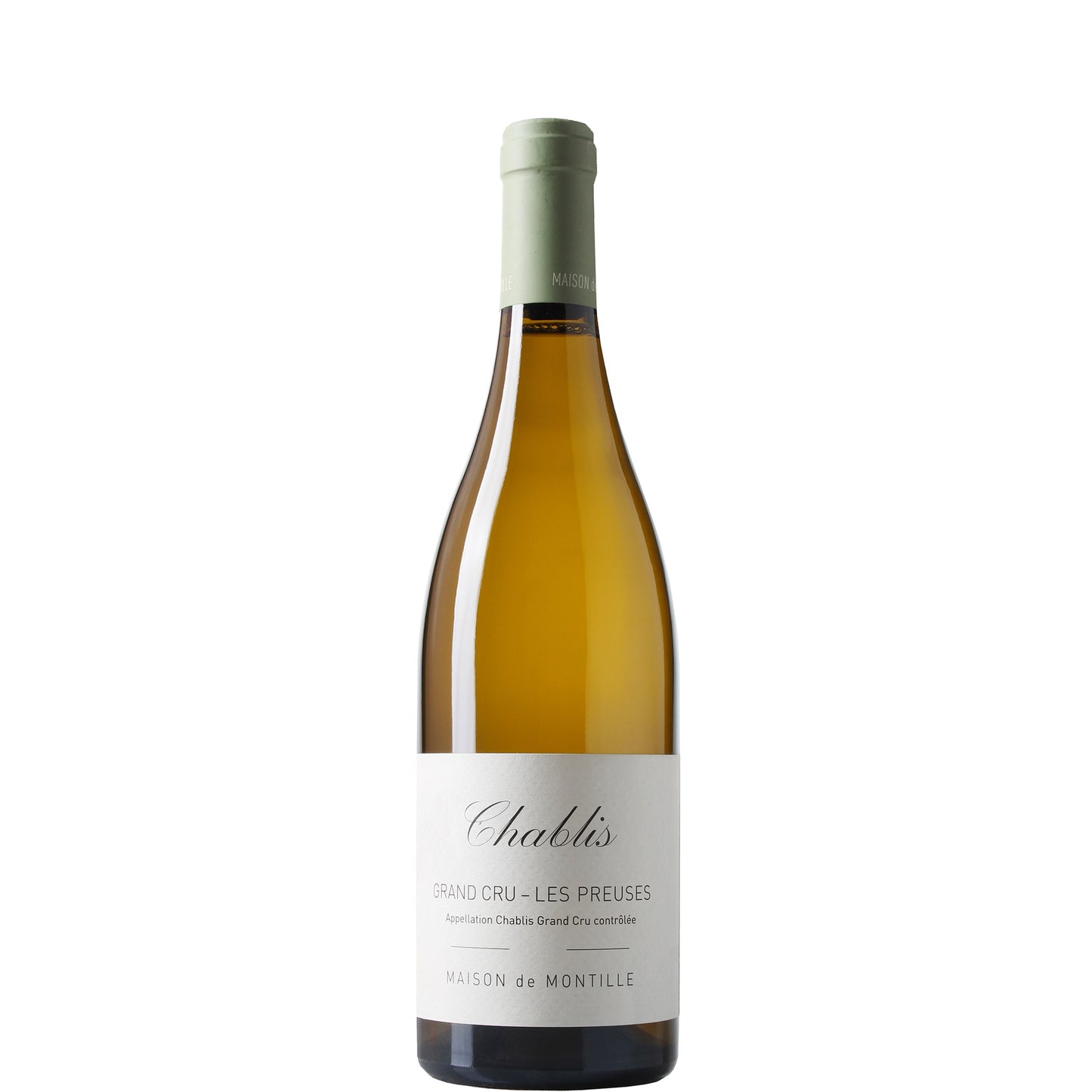
Chablis Grand Cru 'Les Preuses', Maison de Montille, 2018
Chablis Grand Cru 'Les Preuses', Maison de Montille, 2018
- 75cl
- 13%
- White Still
- Chardonnay
- Organic
- Biodynamic
Couldn't load pickup availability

Optimal drinking window: Now - 2035
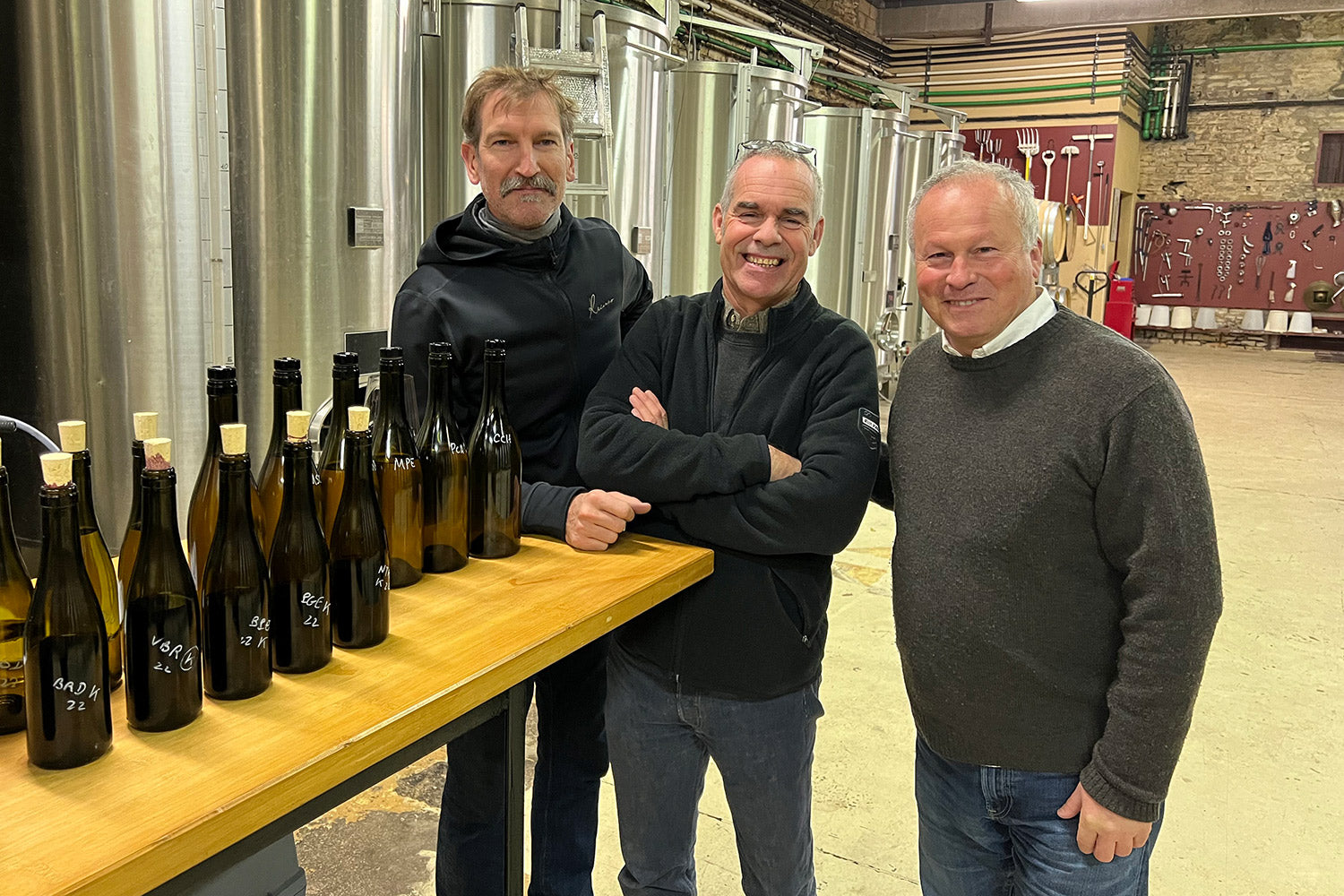
Working with organically farmed vineyards and a philosophy of minimal intervention, our friends at de Montille focus on expressing the purity and precision of Chablis’ famed Kimmeridgian soils. The Les Preuses, one of the appellation’s seven Grand Crus, is often regarded as the most elegant of the group, prized for its combination of power, refinement and remarkable ageing potential.
The warm and generous 2018 vintage has produced a wine of impressive depth, yet one that retains the freshness and mineral definition that make great Chablis so compelling. Careful élevage, with only a subtle influence from oak, allows the vineyard’s character to remain front and centre. Richer than many cooler-vintage Chablis, yet unmistakably Grand Cru in its poise and precision, this is a superb expression of one of the region’s finest terroirs.
At eight years old in 2026, this is entering what we'd call its first window of genuine pleasure: the primary fruit has settled, the oak is fully integrated, and the Kimmeridgian mineral character is becoming more pronounced and assured. Over the next three to five years, expect the texture to deepen and the savoury, almost waxy complexity of mature Grand Cru Chablis to emerge more fully. The warmth of the 2018 vintage gives it a little more flesh than a leaner year, which means it should plateau somewhere around 2030-2033 rather than peaking earlier. We'd be surprised if it didn't drink well until 2035, and the very best bottles may hold beyond that. If patience isn't your strong suit, drink it now with food — it's already compelling.
Tasting Notes
AppearanceDeep gold with a bright, clear rim — richer in colour than a cooler-vintage Chablis, reflecting 2018's generous warmth.
NoseRipe white peach, lemon curd, and orchard blossom come first, followed by something altogether more mineral: wet chalk, oyster shell, and a faint smokiness that feels like flint struck in a cold cellar. The oak is present but behaves itself entirely.
PalateBroad and textured on entry, with real weight for Chablis — the 2018 vintage makes itself known here. But the acidity holds everything taut, and that saline, chalky mineral quality runs through the mid-palate like a thread, keeping the wine honest and focused. Ripe citrus and white stone fruit are framed by something steelier underneath.
FinishLong, precise, and persistently mineral, with a salty, stony echo that lingers well after the fruit has gone.
Overall impression2018 in a warmer key, but Les Preuses never lets you forget where it comes from.
Food Pairings
In Chablis, this is the wine you open when the oysters arrive — the Kimmeridgian soils are literally made from ancient oyster beds, and the pairing is almost too logical to argue with. Locals would also reach for it alongside a simple plateau de fruits de mer, or a sole meunière where the butter and lemon play directly into the wine's richness and acidity. In the Burgundian tradition, a roast poulet de Bresse with cream sauce would be a natural match for a wine of this texture and weight. Further into the meal, a young Époisses or a slice of Chaource would stand up to the wine's mineral backbone without overwhelming it.
We think this wine would go well with
Serve at around 12-13°C — cold enough to preserve the freshness and mineral definition, but not so cold that the texture and complexity close up. No need to decant, though giving it twenty minutes in the glass to open up does it real favours. A large-bowled white Burgundy glass will give the aromas room to develop without losing the precision that makes this wine what it is.
Les Preuses sits on the northern flank of Chablis' Grand Cru hillside, where the Kimmeridgian limestone and clay soils — ancient seabed laced with fossilised oyster shells — give the wines their signature mineral edge and salty precision. The slope faces south to south-west, offering good sun exposure that, in a warm year like 2018, pushes ripeness without sacrificing the cool-climate freshness Chablis depends on. Les Preuses is generally considered the most delicate and perfumed of the seven Grand Crus, sitting between the more powerful Vaudésir and Bougros. That combination of exposure, elevation, and soil depth produces wines of genuine tension: broad and ripe on the surface, but anchored by something altogether more stony and ancient underneath.
Chablis Grand Cru is the summit of the appellation — seven named lieux-dits on a single south-facing hillside just north of the town of Chablis, collectively covering around 100 hectares. The AOC rules require 100% Chardonnay, with minimum natural alcohol of 11%, though the Grand Crus almost always exceed this comfortably. Unlike Côte d'Or Burgundy, where oak ageing is standard, the best Chablis producers treat oak with considerable restraint, letting the Kimmeridgian mineral character do the talking. The result is a style that sits apart from any other white Burgundy: crisper, more saline, more overtly stony — and often undervalued given the quality in the glass.
Burgundy growers will tell you that 2018 was the vintage that reminded them why they fell in love with their vineyards in the first place. A glorious summer of sustained warmth without the punishing heat that can strip freshness from Pinot Noir, followed by cool nights that preserved the acidity. The flowering went smoothly, fruit set was generous, and harvest arrived early but without panic—exactly the sort of classical growing season that becomes rarer each decade.
What landed in the cellars was Burgundy at its most seductive: Pinot Noir with real depth of colour and fruit concentration, yet still dancing on its toes rather than plodding along. The Chardonnays show beautiful ripeness balanced by that crucial mineral backbone, particularly from the better sites in Chablis and the Côte de Beaune. We're drinking these wines now with enormous pleasure—they hit that sweet spot where primary fruit hasn't faded but the tannins have softened into silk. The top cuvées will cellar beautifully for another decade, but frankly, why wait?
FAQs
What does this wine taste like?
Think ripe white peach and lemon curd layered over oyster shell, wet chalk, and a faint smokiness. It has real weight and texture for Chablis — the warm 2018 vintage sees to that — but the acidity keeps everything focused, and there is a persistent saline, stony quality that runs from start to finish. It is a bigger, more generous style than a cool-vintage Grand Cru, but unmistakably mineral at its core.
When should I drink this wine?
It is drinking well now and will continue to do so until around 2035. We are at something of a sweet spot in 2026: the fruit has settled, the oak is fully absorbed, and the Kimmeridgian minerality is beginning to assert itself more clearly. If you can wait another two to three years, the wine will have gained further complexity and a more savoury, layered character.
Is this wine worth cellaring?
Yes, with confidence. Les Preuses is one of the most age-worthy of Chablis' seven Grand Crus, and the 2018 vintage gives it the flesh and structure to develop over a decade or more. The combination of ripe fruit, vibrant acidity, and deep mineral definition is exactly what you want in a wine built for the long haul. We'd expect it to plateau around 2030-2033 and hold well until 2035.
What food should I serve with this wine?
Oysters are the obvious and entirely correct answer — the wine's soils are made from fossilised oyster beds, and the affinity is real. Beyond that, try it with grilled sole, a simple cream-sauced chicken, or a rich fish pie. If you are heading to cheese, a young Chaource or Époisses will match the wine's weight without overwhelming its mineral precision.
How should I serve this wine?
Serve at around 12-13°C in a large-bowled white Burgundy glass. No need to decant, but give it twenty minutes or so in the glass before drinking — it opens up considerably with a little air, and the mineral complexity becomes more pronounced as it warms slightly in the glass.
How does Maison de Montille's Chablis compare to its Côte d'Or wines?
The family's reputation was built in Volnay and Pommard on the Côte d'Or, where they are known for wines of precision, restraint, and exceptional ageing potential. The Chablis operation is more recent, but the philosophy is identical: organic farming, minimal intervention, and a deep respect for what the vineyard is trying to say. The style here is leaner and more mineral than their Burgundian reds, but the same sense of focus and purpose runs through both.
Explore related wines


What are you looking for tonight? Tell me the occasion, a grape, a region — or just try a suggestion below.
Your recommendations will appear here.
-
-
Speak to one of our Wine Gurus
Speak to a Wine GuruWith years of experience, our team can help you with all your wine buying and selling needs