
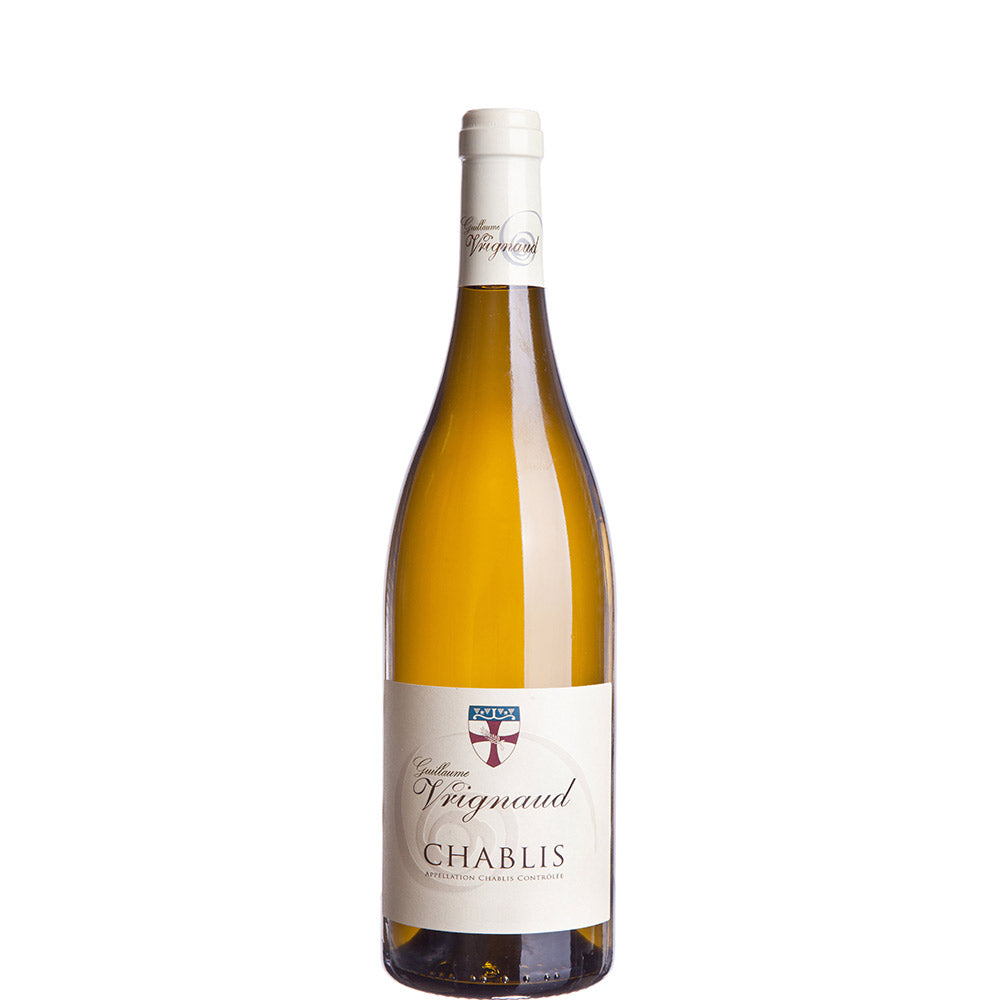
Chablis, Domaine Vrignaud, 2022
Chablis, Domaine Vrignaud, 2022
- 75cl
- 12%
- White Still
- Chardonnay
- Organic
Couldn't load pickup availability

Optimal drinking window: Now - 2029
About Chablis, Domaine Vrignaud, 2022
Domaine Vrignaud, spanning 29 hectares near Fontenay-près-Chablis, embraces a distinct Terroir approach, rooted in a deep appreciation for its heritage.
Recognising that every individual envisions Chablis uniquely, the estate's ethos revolves around safeguarding its legacy. This commitment extends to meticulously tending vines on both Portlandian and Kimmeridgian strata, including clones and selections from mass propagation, all under the umbrella of Organic Agriculture.
In the 2022 vintage, Domaine Vrignaud's Chablis continues to impress with its pure expression of Chardonnay. Vibrant acidity and mineral nuances define this wine, complementing its citrus and green apple notes. Domaine Vrignaud's dedication to terroir shines through, making their 2022 Chablis a true reflection of the region's character.
Currently showing its youthful primary fruit character with bright citrus and green apple flavours at the forefront. Over the next 2-3 years, these primary notes will integrate and develop subtle honeyed complexity whilst maintaining the wine's essential freshness. The mineral backbone will become more prominent as the fruit softens slightly, reaching peak drinking around now. After 2029, the wine will begin to lose its vibrant acidity and characteristic precision, though well-stored bottles may continue drinking pleasantly for a year or two beyond.
Food Pairings
In Chablis, this wine would traditionally accompany the region's famous oysters from nearby Cancale, where the wine's minerality echoes the briny shellfish perfectly. Local charcuterie featuring jambon persillé (ham and parsley terrine) makes an excellent match, as do the area's freshwater fish preparations like pike or perch in white wine sauce. Chaource, the local soft cheese, provides a creamy contrast to the wine's acidity, whilst simple preparations of escargots in garlic and parsley allow both the wine's purity and the dish's earthiness to shine.
We think this wine would go well with
Serve well-chilled at 8-10°C to preserve the wine's crisp acidity and mineral precision. No decanting required - this wine's charm lies in its immediate freshness and clarity. Use traditional Burgundy glasses or smaller bowled white wine glasses to concentrate the delicate aromatics. Open just before serving as the wine is at its most vibrant when freshly poured.
The vineyards sit on the classic Kimmeridgian soils that made Chablis famous: ancient marine sediments rich in fossilised oyster shells that impart the wine's distinctive mineral character. Mixed with Portlandian limestone, these chalky soils provide excellent drainage whilst retaining enough moisture for the vines during dry spells. The cool continental climate, with its late springs and occasional frost risk, naturally limits yields and concentrates flavours, creating wines of remarkable purity and precision.
Chablis AOC represents Chardonnay at its most mineral and restrained, the polar opposite of its oaked cousins elsewhere in Burgundy. The appellation covers around 5,800 hectares of Kimmeridgian and Portlandian soils, producing wines that must be 100% Chardonnay and typically see little or no oak ageing. Village-level Chablis like this sits between the basic Petit Chablis and the prestigious Premier and Grand Crus, offering excellent value whilst capturing the appellation's signature combination of citrus fruit and chalky minerality.
The 2022 growing season in Burgundy began with a worryingly dry spring that had vignerons checking soil moisture levels weekly, followed by a summer that alternated between intense heat and welcome rainfall. The vines handled the stress remarkably well, producing smaller berries with concentrated flavours, though yields dropped significantly across both the Côte d'Or and Chablis. Harvest began earlier than usual, with many producers picking in late August under bright skies.
What emerged from the cellars shows a vintage of surprising finesse given the challenging conditions. The Pinot Noirs display vivid fruit and firm tannins without the jammy weight you might expect from a hot year, whilst the Chardonnays retained their mineral backbone alongside ripe stone fruit flavours. We're finding the village-level wines particularly compelling right now, drinking beautifully with just a year or two of bottle age, though the premier and grand crus will reward patience until the late 2020s.
FAQs
What does this Chablis taste like?
Bright and mineral-driven with citrus and green apple flavours, crisp acidity, and that distinctive chalky character that makes Chablis so refreshing.
When should I drink this wine?
Perfect now for its youthful freshness, but will develop lovely complexity over the next 4-6 years. Drink by 2032 for best results.
What food pairs well with this Chablis?
Shellfish and oysters are classic matches, but it also works beautifully with goat's cheese, light fish dishes, and simple chicken preparations.
How should I serve this wine?
Serve well-chilled at 8-10°C in smaller white wine glasses. No need to decant - just open and pour.
Is this wine worth cellaring?
While drinking beautifully now, it will reward 2-4 years of careful cellaring as the mineral character develops and the wine gains complexity.
How does this compare to Premier Cru Chablis?
Village Chablis offers excellent value with classic mineral character, though Premier Crus from the best sites will show greater concentration and aging potential.
Explore related wines


What are you looking for tonight? Tell me the occasion, a grape, a region — or just try a suggestion below.
Your recommendations will appear here.
-
-
Speak to one of our Wine Gurus
Speak to a Wine GuruWith years of experience, our team can help you with all your wine buying and selling needs