

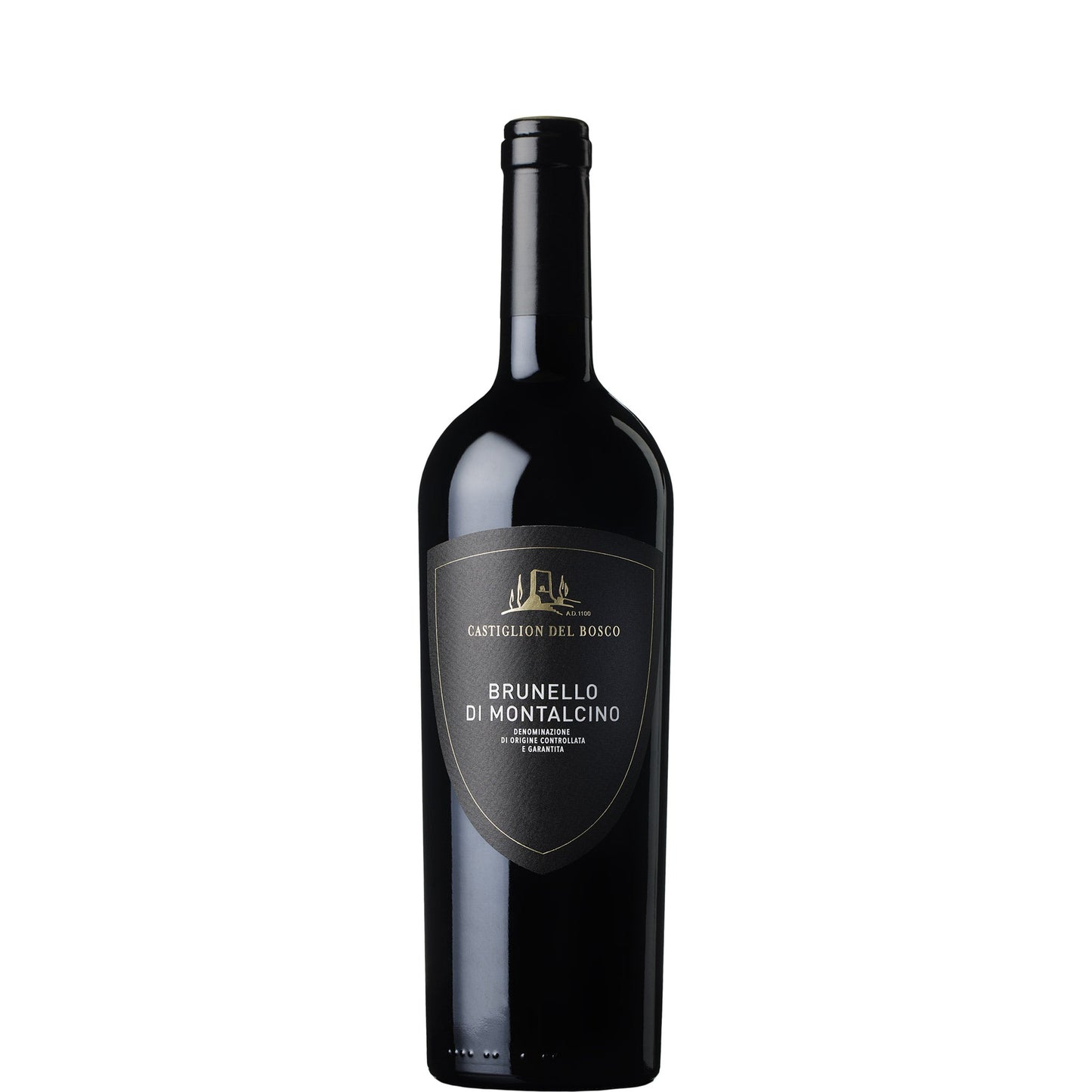
Castiglion Del Bosco, Brunello Di Montalcino, DOCG, 2018
Castiglion Del Bosco, Brunello Di Montalcino, DOCG, 2018
- 75cl
- 13.5%
- Red Still
- Sangiovese
- Organic
Couldn't load pickup availability

Optimal drinking window: Now - 2038
Castiglion Del Bosco has solidified their position as one of the most prominent estates in Montalcino, and were one of the founding members of the 'Consorzio del Vino Brunello di Montalcino'. In the vineyards they practice organic farming and harvest by hand, whilst the cellar is completely gravity fed and the wines are fermented with local yeasts. The Brunellos have a Burgundian flair while still being deeply rooted in the traditions of the area.
Their Brunellos are aged for a minimum of 24 months in oak, followed by 24 months in bottle. The sought after location in Campo Del Drago, perched at the top one of the tallest hills in Montalcino, gives the grapes a favourable sea breeze resulting in wines that are sensual and delicate, with floral notes and sleek minerality.
The 2018 is already in a genuinely enjoyable place — the tannins are soft, the fruit is bright, and it's been gaining complexity with each passing month. We'd drink it with real pleasure now, but expect the floral and spice elements to integrate further over the next three to five years, adding layers of dried fruit, tobacco leaf, and that earthy Sangiovese earthiness that defines older Brunello. The wine should reach a comfortable plateau somewhere around 2030 to 2033. Beyond 2038, the fruit will begin to dry out and the wine will shift into a more austere, secondary phase — still interesting, but less generous.
What the critics say:
"A dusty blend of cedary spice, mentholated herbs, rose petals and sour cherry wafts up from the 2018 Brunello di Montalcino. It’s round and supple in feel, with floral-laced red and black fruits complemented by a subtle tinge of sweet spice. This leaves a bitter twang of sour berries, while a burst of residual acidity adds a cheek-puckering freshness, and a gentle tug of tannin slowly recedes. The 2018 has improved each time I’ve tasted it in the last five months, and it now shows the ruggedness of Northwestern Montalcino Sangiovese, but in a wonderfully balanced way."
"In the far northwest of Montalcino, the expansive Castiglion del Bosco estate sprawls over several hills of varying altitude, exposure and terrain. From 42 hectares designated for Brunello comes this impressive 150,000-bottle production. Rather than exploding with fragrance, the 2018 unveils its evocative floral scents slowly. These reach a crescendo on the palate, melding seamlessly with cheerful pure pomegranate and cherry flavours. Supple tannins are velvety in texture. Unforced and fluid, this is hard to resist now."
Tasting Notes
AppearanceMedium ruby with a translucent, garnet-edged rim that speaks to the wine's aromatic rather than muscular disposition.
NoseThe 2018 doesn't announce itself loudly — it unfolds, gradually giving up dried rose petals, mentholated herbs, and a dusty cedary spice. There's sour cherry at its core, with something lifted and mineral underneath that recalls the altitude of the estate.
PalateRound and supple, with floral-inflected red fruit — pomegranate, cherry, a whisper of dark berry — threaded through with sweet spice and a bright seam of acidity that gives the wine its shape. The tannins are velvety rather than grippy, which makes this unusually inviting for its age.
FinishA bitter, sour-berry twang lingers with real persistence, the acidity keeping everything fresh and the tannins receding cleanly.
Overall impressionA Brunello of genuine elegance and northern Montalcino character — fluid, unforced, and harder to put down than its pedigree might suggest.
Food Pairings
In Montalcino and the wider Sienese countryside, Brunello is the wine you open for the big Sunday lunch: a slow-braised wild boar with pappardelle, or a bistecca di chianina with nothing more than olive oil and salt. Pici al ragù — the thick, hand-rolled local pasta with a long-cooked meat sauce — is a classic match, the wine's acidity cutting through the richness beautifully without anyone having to think too hard about it. Aged Pecorino di Pienza, sharp and crumbly, is the local cheese of choice and works well with the wine's mineral edge. On a more celebratory occasion, a whole roasted Valdichiana pork loin stuffed with rosemary and garlic would sit alongside this perfectly.
We think this wine would go well with
Serve at 17-18°C — any warmer and the wine loses its freshness, any cooler and the floral aromatics stay locked in. Decanting for 30 to 45 minutes will open it up nicely; the 2018 is already approachable and doesn't need the extended aeration you'd give a younger, more tannic Brunello. A large-bowled Burgundy-style glass works well here, supporting the aromatic lift and the wine's more delicate, Sangiovese-specific character rather than a narrower Bordeaux glass.
Castiglion del Bosco sits in the far northwest of Montalcino, where the estate sprawls across multiple hills at varying altitudes and aspects. The Campo del Drago vineyards occupy some of the highest ground in the appellation, where cooling sea breezes from the Tyrrhenian coast moderate what would otherwise be intense Tuscan heat. This elevation and airflow preserve natural acidity and encourage the aromatic finesse that sets these wines apart from the more brooding, southern-facing Montalcino estates. The soils are a mix of galestro and alberese — the schist and clay characteristic of Tuscany — lending the wines their mineral backbone and structural precision.
Brunello di Montalcino is one of Italy's most storied DOCG appellations, built entirely on Sangiovese Grosso — known locally as Brunello — grown on the hillsides surrounding the hilltop town of Montalcino in southern Tuscany. The rules are demanding: minimum 24 months in oak, a further six months in bottle for the standard release, with Riserva requiring even longer ageing. Wines from the cooler, higher-altitude north and northwest of the appellation tend toward elegance and florality, while those from the warmer south offer more power and density. Brunello's reputation for longevity is well earned, though the best modern producers manage to balance that ageing potential with genuine early approachability.
The 2018 growing season in Tuscany served up drama worthy of a Renaissance plot. A wet spring had producers fretting about disease pressure, but summer heat arrived with perfect timing to dry things out and concentrate the fruit. The crucial factor proved to be autumn's extended dry spell, which allowed for leisurely harvest decisions and let each variety ripen at its own pace without the usual scramble against September storms.
What emerged from the cellars shows Tuscany at its most approachable. The Sangiovese displays that lovely balance of bright cherry fruit and earthy backbone that makes Chianti sing, whilst the international varieties found their footing beautifully in the coastal zones. These aren't the brooding, tannic monsters that demand a decade of patience, but wines with enough structure to age gracefully if you fancy waiting. Most are drinking beautifully now, though the finest examples from established producers will reward those who can resist temptation until the mid-2020s.
FAQs
What does this wine taste like?
Think dried rose petals, sour cherry, and cedary spice on the nose, with a round, supple palate of pomegranate and red fruit, bright acidity, and velvety tannins. It has the refinement you'd associate with the cooler northwest of Montalcino — floral and mineral rather than dense and brooding.
Is the 2018 ready to drink now?
Yes, and it's genuinely hard to resist. The tannins are already velvety, the fruit is vibrant, and the wine has been improving steadily. Drink it now with pleasure, or hold until around 2030 to 2033 for greater complexity.
How long will this wine keep?
We'd expect it to drink well until around 2036 to 2038. The acidity and structure give it real longevity, though beyond that point the fruit will start to recede and you'll be in more austere territory.
What food should I pair with this?
Classic Tuscan food is your friend here — slow-braised wild boar, pappardelle with ragù, bistecca with olive oil and salt. Aged Pecorino works brilliantly with the wine's mineral edge, and a rosemary-stuffed roast pork loin would be a very fine match indeed.
Should I decant it?
A short decant of 30 to 45 minutes is ideal. The 2018 is already open and approachable, so you're not trying to tame big tannins — you're just giving the floral aromatics room to open up. Serve at around 17-18°C.
What makes Castiglion del Bosco different from other Brunello producers?
The estate sits in the far northwest of Montalcino at high altitude, where sea breezes from the Tyrrhenian coast give the wines a finesse and florality that's quite distinct from the more powerful, southerly estates. Add organic farming, gravity-fed cellars, and a founding role in the Brunello Consorzio, and you have one of the appellation's most credible addresses.
Explore related wines


What are you looking for tonight? Tell me the occasion, a grape, a region — or just try a suggestion below.
Your recommendations will appear here.
-
-
Speak to one of our Wine Gurus
Speak to a Wine GuruWith years of experience, our team can help you with all your wine buying and selling needs