

Bourgogne Rouge, Domaine Duroché, 2021
Bourgogne Rouge, Domaine Duroché, 2021
- 75cl
- 13.5%
- Red Still
- Pinot Noir
Couldn't load pickup availability

Optimal drinking window: 2026 - 2032
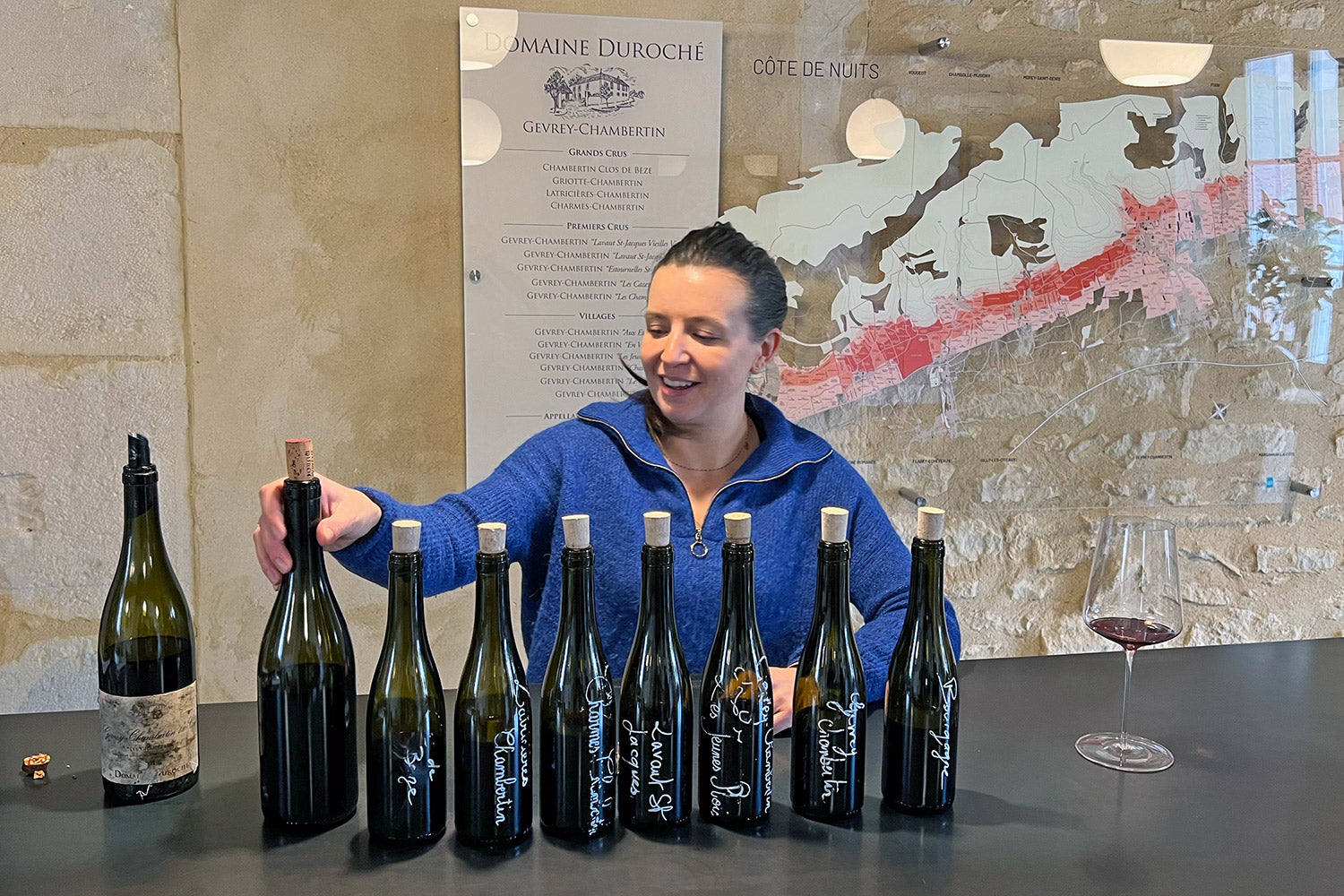
Domaine Duroché is a Gevrey-Chambertin name whispered with real reverence among Burgundy obsessives, and this Bourgogne Rouge is the perfect entry point into why. Pierre Duroché, who took over this estate while still in his early twenties, farms with a precision and humility that belies the family's deep Gevrey roots, and the regional bottling benefits from the same meticulous hand as the grand cru wines.
This is Pinot Noir stripped back to its purest form: pale garnet in the glass, lifted red cherry and wild strawberry on the nose, with a savoury, stony edge that hints at the village wines further up the ladder. The palate is silky rather than weighty, finishing on fine, sandy tannins and a gentle savoury note.
This wine is drinking well now, with its red fruit still fresh and the tannins softening nicely into the second year of life. Over the next couple of vintages expect the fruit to deepen slightly and the earthy, savoury notes to come more to the fore. It's not built for long-term cellaring, so we'd encourage drinking it within its window rather than tucking it away and forgetting about it.
Tasting Notes
AppearancePale to medium garnet with a bright, translucent rim.
NoseRed cherry, wild strawberry, and redcurrant mingle with a faint dusty, earthy note. There's a subtle floral lift, violets perhaps, beneath the fruit.
PalateLight to medium-bodied with silky texture and lively acidity. Red fruit carries through with a savoury, stony undertone that keeps things honest rather than jammy.
FinishFine, slightly chalky tannins close things out with a gentle savoury echo.
Overall impressionA generous, well-pitched introduction to Duroché's house style.
Food Pairings
In Gevrey-Chambertin, a wine like this would happily sit alongside jambon persillé or a simple coq au vin made lighter than its richer cousin. Locals might reach for it with a plate of charcuterie and gougères before a bigger meal, or pour it chilled slightly with roast chicken and wild mushrooms in autumn. It's versatile enough for a Tuesday night duck breast or a Sunday lunch of guinea fowl.
We think this wine would go well with
Serve at 14-16°C, cooler than you might think, to keep the red fruit lively and fresh. Decanting isn't essential, but 20-30 minutes in a jug won't hurt if you're opening it young. A standard Burgundy glass, with its wide bowl, will show off the aromatics nicely.
The fruit for this Bourgogne Rouge comes from parcels around Gevrey-Chambertin and the wider Côte de Nuits, planted on the thin limestone and marl soils that define the region's Pinot Noir character. Elevations here sit lower than the grand cru slopes, giving riper, more generous fruit, though the underlying limestone still lends a chalky backbone. The continental climate, with cold winters and warm, often unpredictable summers, keeps acidity fresh even in warmer vintages like 2021's late, cooler growing season.
Bourgogne Rouge is Burgundy's broadest red appellation, covering Pinot Noir grown anywhere within the region's approved boundaries, often from younger vines or declassified parcels near grander sites. It carries none of the hierarchy or prestige of village, premier cru, or grand cru designations, but in the hands of a serious grower like Duroché it becomes a genuine window into house style at an accessible price. Think of it as the producer's handwriting before the flourishes are added.
The 2021 growing season in Burgundy started badly and got worse before pulling off one of wine's great escapes. Spring frost in April devastated vineyards across the Côte d'Or, followed by a summer that alternated between biblical downpours and scorching heat. Many producers lost 50% or more of their crop to the frost alone, then watched hail batter what remained in some unlucky villages. By August, with rot creeping through rain-soaked vineyards, even the most optimistic vignerons were writing off the vintage.
What emerged from this chaos surprised everyone: wines with remarkable freshness and purity, if you can find them. The tiny yields meant those grapes that survived were intensely concentrated, while the September sunshine saved the day with perfect ripening conditions. We find the reds show beautiful fruit clarity without heaviness, drinking with an immediacy that makes them irresistible now but promising a decade or more of evolution. The whites are particularly stunning, with a mineral intensity that cuts through their richness. Yes, there's not much 2021 Burgundy about, and yes, it's expensive, but this is one of those vintages where disaster bred greatness.
FAQs
What does this wine taste like?
Bright red cherry and strawberry fruit with a savoury, earthy edge and fine, gentle tannins.
When should I drink this wine?
It's approachable now and will drink well until around 2032; there's no need to wait.
What food should I pair it with?
Try it with roast chicken, charcuterie, or a lighter coq au vin, dishes that echo its Burgundian roots.
How should I serve it?
Serve at 14-16°C in a Burgundy glass; decanting isn't necessary but a short rest in a jug can help.
Is this wine worth cellaring?
It's made for relatively early enjoyment rather than long-term ageing, though a few years in the cellar will do no harm.
How does this compare to Duroché's village wines?
It shares the same meticulous hand and bright fruit purity, just in a lighter, more immediate register.

Explore related wines


What are you looking for tonight? Tell me the occasion, a grape, a region — or just try a suggestion below.
Your recommendations will appear here.
-
-
Speak to one of our Wine Gurus
Speak to a Wine GuruWith years of experience, our team can help you with all your wine buying and selling needs