
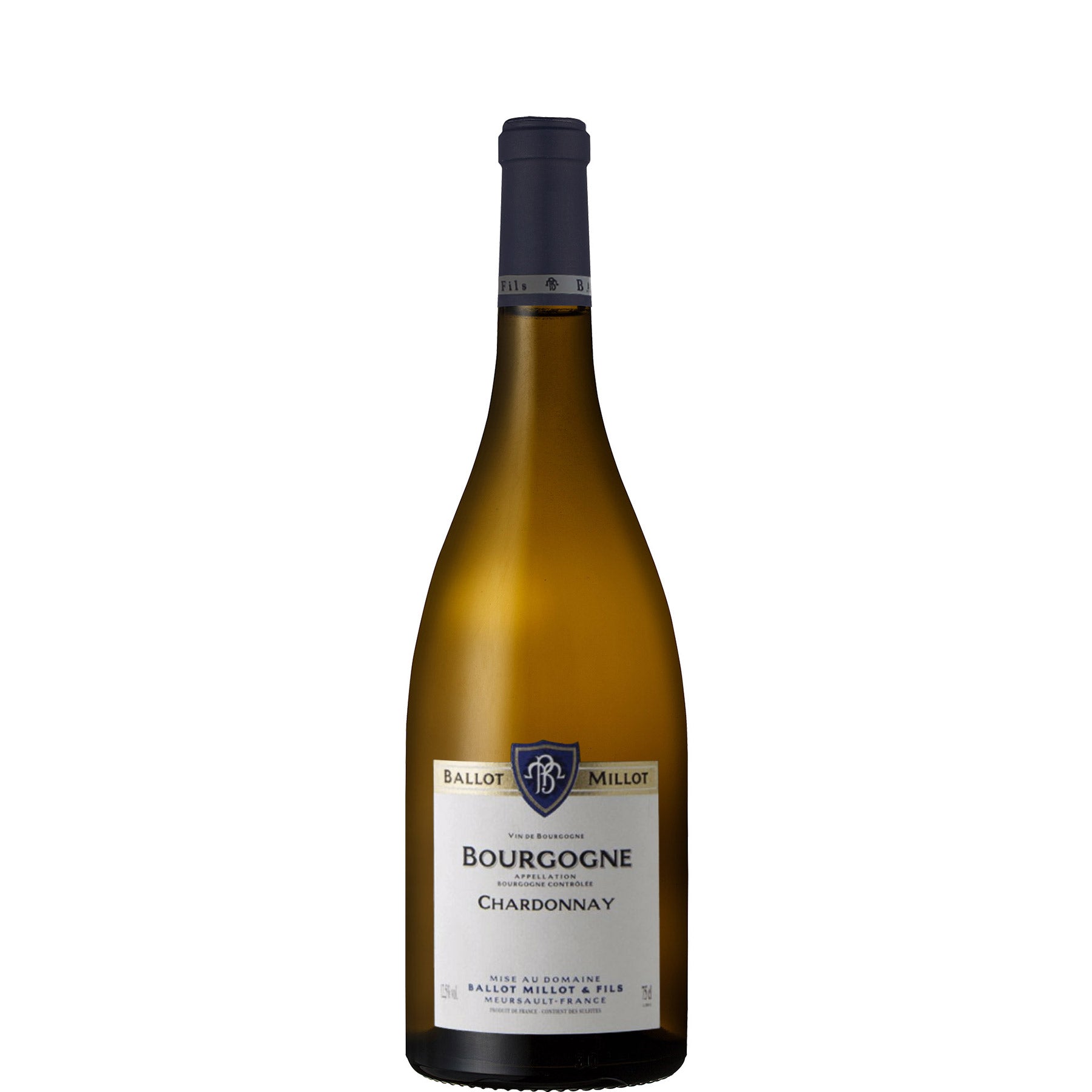
Bourgogne Chardonnay, Domaine Ballot-Millot, 2022
Bourgogne Chardonnay, Domaine Ballot-Millot, 2022
- 75cl
- 13%
- White Still
- Chardonnay
- Organic
Couldn't load pickup availability

Optimal drinking window: Now - 2029
Domaine Ballot-Millot, now under the skilled stewardship of the 17th-generation vintner Charles Ballot, remains one of Meursault’s leading estates.
Charles farms the vineyards organically, whilst in the cellar, he follows the lunar cycle, allowing nature's rhythms to guide his winemaking. His guiding principle is let the terroir do the talking, and the wines are always beautifully expressive and elegant.
At four years old, this is already drinking with confidence — the primary citrus and stone fruit are vivid, the oak well-integrated, and the texture composed. We'd drink it now with pleasure, but it has enough concentration and acidity to keep well until 2028 or so, when the fruit may soften a little and secondary, more nutty characters begin to emerge. Don't push it much beyond that: at the Bourgogne level, even from a great domaine, this is a wine to enjoy rather than cellar. Drink up by 2029.
What the critics say:
"The 2022 Bourgogne Chardonnay is a blend of parcels, 70% in Meursault and 30% in Puligny, with a majority purchased grapes and juice. It has a fresh, vibrant bouquet with citrus fruit and crushed stone - very well-defined. The palate is well-balanced with a slightly creamy texture thanks to the 20% new oak (al little higher than usual), offering touches of chamomile on the finish. Fine. NB this cuvée is bottled under Diam."
"A green tint to the lemon yellow colour. The nose shows sunshine but with a fresh greengage fruit in the midst, suggests plenty of body. On the palate, the energy is certainly there, while the fruit is on the softer side but with considerable concentration."
Tasting Notes
AppearancePale lemon with a faint green tint, clear and bright.
NoseFresh and vibrant from the off — citrus fruit and crushed stone with that clean, mineral precision you'd hope for from parcels in two of Burgundy's greatest white wine villages. There's a little greengage in there too, giving it a lively, almost orchard-fresh character.
PalateWell-balanced and energetic, with a softness to the fruit that stops well short of flabbiness — the concentration is real. The 20% new oak adds a gentle creaminess to the texture without dominating, and it's the wine's underlying tension that keeps everything honest.
FinishClean and medium-length, with a pleasing chamomile lift that lingers.
Overall impressionA proper Bourgogne Chardonnay with genuine pedigree behind it — drinks well above its appellation level.
Food Pairings
In Meursault, this kind of wine is poured without ceremony alongside jambon persillé — the classic Burgundian jellied ham — or a simple plate of Époisse with good bread and butter. Locals would also drink it with a quenelle de brochet, the silky pike dumpling that's a staple of Burgundian brasseries. Roast chicken with tarragon cream is an obvious and excellent match. At the lighter end, a warm salad of lardons and frisée with a soft-boiled egg works beautifully.
We think this wine would go well with
Serve at around 11-12°C — cold enough to preserve freshness, warm enough to let the fruit breathe. No need to decant, though 20 minutes in the glass will open it up nicely. A good Burgundy-style bowl with a slightly tapered rim will concentrate the mineral lift and keep the wine from feeling too broad.
The parcels behind this wine are drawn predominantly from Meursault, with a further 30% from Puligny-Montrachet — two villages whose limestone-rich soils give Chardonnay its characteristic tension and mineral backbone. Meursault's broader, more marly soils lend a natural creaminess, while Puligny's tighter, whiter limestone adds precision and lift. The 2022 growing season was warm and generous, producing concentrated fruit without sacrificing the freshness that defines good Côte de Beaune Chardonnay.
Bourgogne Chardonnay is the entry point of the Burgundian appellation ladder, drawing fruit from across the Côte d'Or and surrounding areas rather than any single village or premier cru site. The rules are simple: 100% Chardonnay, a minimum 10.5% ABV, and yields capped at 60 hl/ha. What makes a domaine-level Bourgogne Chardonnay interesting is that the address on the label still matters enormously — fruit from a domaine farming Meursault and Puligny-Montrachet vines will always outperform generic négoce blends, often at a fraction of the village wine price.
The 2022 growing season in Burgundy began with a worryingly dry spring that had vignerons checking soil moisture levels weekly, followed by a summer that alternated between intense heat and welcome rainfall. The vines handled the stress remarkably well, producing smaller berries with concentrated flavours, though yields dropped significantly across both the Côte d'Or and Chablis. Harvest began earlier than usual, with many producers picking in late August under bright skies.
What emerged from the cellars shows a vintage of surprising finesse given the challenging conditions. The Pinot Noirs display vivid fruit and firm tannins without the jammy weight you might expect from a hot year, whilst the Chardonnays retained their mineral backbone alongside ripe stone fruit flavours. We're finding the village-level wines particularly compelling right now, drinking beautifully with just a year or two of bottle age, though the premier and grand crus will reward patience until the late 2020s.
FAQs
What does this wine taste like?
Fresh citrus and crushed stone on the nose, with a creamy, concentrated palate and a clean chamomile finish. It has real energy and precision for a Bourgogne-level Chardonnay, which is exactly what you'd hope for when the fruit comes from Meursault and Puligny-Montrachet parcels.
When should I drink this wine?
It's drinking well now and will continue to do so until around 2028-2029. The primary fruit is at its most vivid right now, so there's no compelling reason to wait. Pour it tonight.
What food should I pair it with?
Roast chicken with cream sauce is the classic match, but it would be equally at home with jambon persillé, a quenelle de brochet, or a good piece of simply cooked white fish. A ripe Époisse and a baguette isn't a bad shout either.
How should I serve it?
Serve at around 11-12°C in a wide-bowled Burgundy glass. No need to decant — just give it 20 minutes in the glass and let it come to you.
Is it worth cellaring?
Not really, and that's not a criticism. This is a wine designed for pleasure in the near term. It has enough structure to hold until 2028-2029, but the fruit is at its most expressive right now. Enjoy it while it's singing.
What makes this different from a generic Bourgogne Chardonnay?
The address on the label matters enormously at this level. Ballot-Millot's parcels are in Meursault and Puligny-Montrachet — two of the Côte de Beaune's great white wine villages. Organic farming, lunar-cycle winemaking, and Charles Ballot's meticulous cellar work mean this drinks well above its appellation price point.

Explore related wines


What are you looking for tonight? Tell me the occasion, a grape, a region — or just try a suggestion below.
Your recommendations will appear here.
-
-
Speak to one of our Wine Gurus
Speak to a Wine GuruWith years of experience, our team can help you with all your wine buying and selling needs