

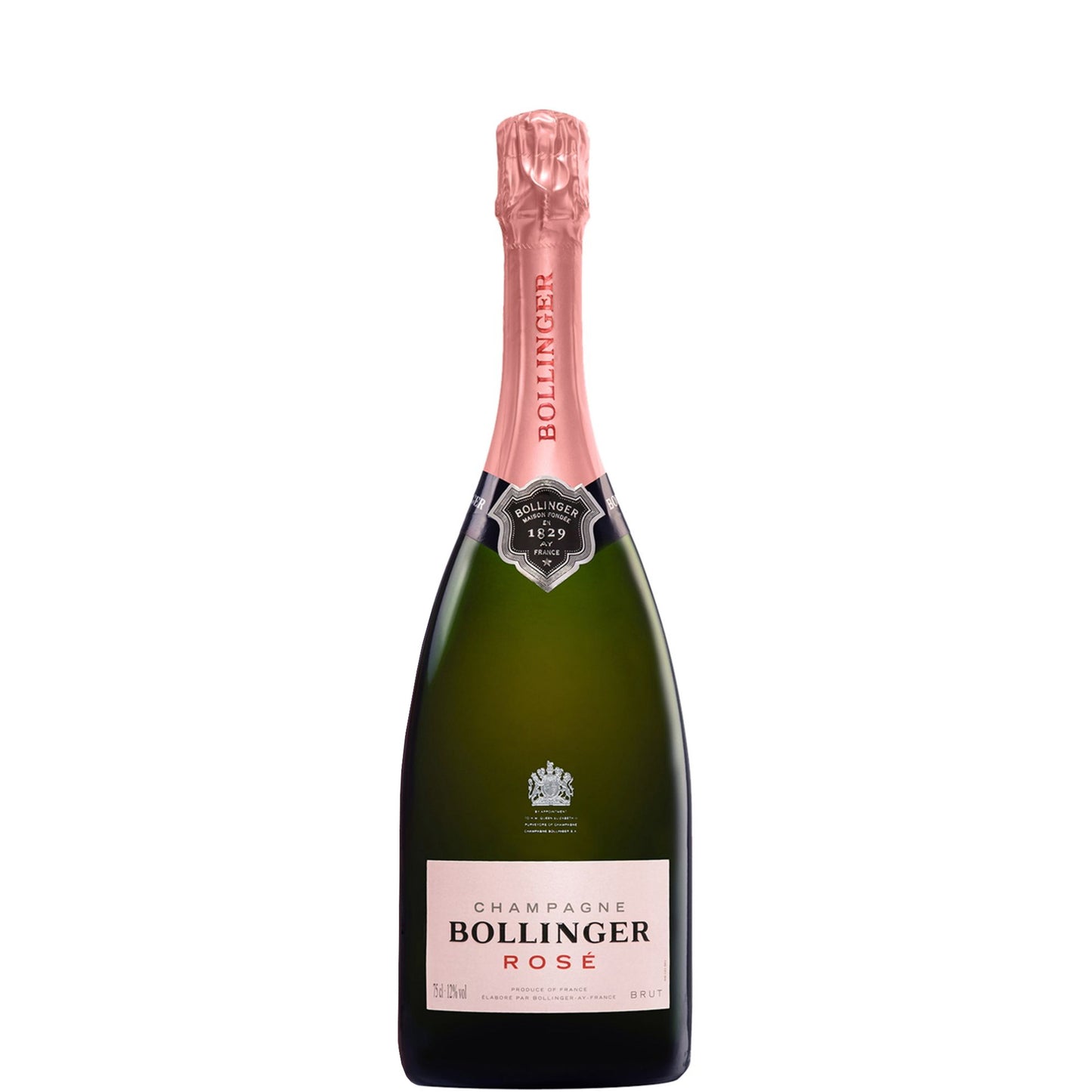
Bollinger, Rosé, NV
Bollinger, Rosé, NV
- 75cl
- 12%
- Rosé Sparkling
- Pinot Noir, Chardonnay, Pinot Meunier
Couldn't load pickup availability

Optimal drinking window: Now - 2035
Bollinger Rosé isn’t your average pink fizz – it’s Pinot-driven, muscular, and downright serious under that rosy hue. Think ripe red berries wrapped up in Bollinger’s trademark richness and depth. There’s a savoury, almost smoky note running through it, with a whisper of spice that makes it feel less frivolous aperitif and more grown-up Champagne with food in mind.
Built on the same solid foundations as Special Cuvée, it gets an extra dose of still red Pinot from Bollinger’s grand cru vineyards to bring the colour and the crunch. A rosé that’s both plush and precise – equally happy next to sashimi, charcuterie, or, frankly, just on its own when you feel like a splash of pink with proper gravitas.
As a non-vintage release, this is built to drink well now and over the next two to three years. The primary red fruit is vivid and forward, and the barrel-fermented Pinot Noir base gives it enough structure to hold its shape for a while. Kept in a cool cellar, expect the fruit to become more integrated and the savoury, toasty secondary notes to push forward around year two or three. By 2035, it will have given most of what it has to give — this is not a wine designed for a decade of patience, but for the pleasure of a well-chosen moment.
What the critics say:
"Very attractive aromas of strawberry pie with the crust nicely crispy. Copper and iron too. Medium-bodied with real pinot noir character as well as salted butter, hints of barrel and a juicy finish. 64% barrel-fermented pinot noir (5% still red wine), 28% chardonnay and the rest pinot meunier. Rosé just keeps getting better. Drink now."
"The latest release of Bollinger's NV Brut Rosé is showing especially well, offering up complex aromas of sweet stone fruit, honeycomb, freshly baked bread and orange oil, followed by a medium to full-bodied, pillowy and vinous palate. Layered and concentrated, with a pretty pinpoint mousse and ripe but racy acids, it concludes with a long, expansive finish."
Tasting Notes
AppearanceSalmon-copper with a fine, persistent mousse that rises in tight, purposeful streams.
NoseStrawberry tart and cherry compote upfront, then something smokier and more serious lurking underneath — salted butter, a whisper of barrel, and a faint iron note that keeps things honest. It's a generous nose, but it earns its richness.
PalateMedium to full-bodied for a rosé Champagne, with ripe stone fruit and red berry cut through by a racy, crunchy acidity that stops it feeling heavy. There's real Pinot Noir muscle here — flesh and grip — and the mousse is fine enough to carry all that concentration without smothering it.
FinishLong and expansive, with a mineral, almost saline persistence that lingers well after the fruit fades.
Overall impressionA rosé Champagne that takes the format entirely seriously — pink in colour, not in ambition.
Food Pairings
In Champagne, a wine like this would typically be opened at the table rather than as an aperitif — alongside salmon prepared simply with cream and herbs, or a platter of local charcuterie from the Ardennes. Boudin noir with apple is a classic regional pairing, the wine's savouriness and acidity cutting cleanly through the richness. Further towards Paris, you'd find it alongside a plate of oysters from Cancale or a simple roast guinea fowl. The Pinot-driven weight here also makes it a natural companion for veal dishes, where something lighter might disappear entirely.
We think this wine would go well with
Serve between 8 and 10°C — cold enough to keep the mousse lively, warm enough to let the complexity show itself. No need to decant, but do give it five minutes in the glass before diving in; the smoky, savoury notes open up with a little air. A tulip-shaped Champagne glass rather than a flute will do it more justice, giving the nose room to breathe and making the mid-palate weight more apparent.
Bollinger draws on grand cru and premier cru villages in the Aÿ, Verzenay, and Côte des Blancs areas of Champagne, where chalk subsoils dominate. The chalk here acts as both a reservoir and a regulator, holding moisture through dry summers and keeping acidity electric. Pinot Noir grown on the chalk-rich slopes of Aÿ — the heartland of Bollinger's house style — delivers the structure and flesh that makes their wines feel built rather than assembled. The still red wine blended in for colour comes from Bollinger's own Pinot Noir vines in Aÿ, giving the rosé a provenance that most houses simply can't match.
Champagne is the most tightly regulated sparkling wine appellation in the world, covering around 35,000 hectares of north-eastern France and governed by the CIVC. Only three grapes are permitted in any meaningful volume: Pinot Noir, Chardonnay, and Pinot Meunier. Non-vintage Champagne must be aged on its lees for a minimum of fifteen months, though serious houses go considerably further. What makes Champagne distinct from other sparkling regions isn't just the method but the chalk: that brilliant white limestone acts as both drainage and acid-keeper, and it's what gives great Champagne its freshness and longevity at the same time.
FAQs
What does Bollinger Rosé taste like?
Think ripe strawberry and cherry tart, warm pastry, and a savoury, slightly smoky undercurrent. It's fuller and more structured than most rosé Champagnes — the Pinot Noir dominance gives it real flesh and grip, with a long, mineral finish that keeps the whole thing honest.
Is this a serious wine or an aperitif?
Both, but it leans serious. It has the weight and savoury depth to work well with food — charcuterie, salmon, sashimi, roast poultry — and it's built on the same foundations as Bollinger's Special Cuvée. That said, opening a bottle on its own when the mood calls for pink fizz with gravitas is never a mistake.
When should I drink it?
Now is a very good time. It's drinking well, and the fruit is vivid and generous. Kept in a cool cellar, it will hold comfortably until 2035 or so, with secondary complexity developing over time. Don't sit on it for a decade — this is a wine made for pleasure, not a marathon.
How should I serve it?
Between 8 and 10°C, in a tulip glass rather than a flute. Give it five minutes in the glass before your first sip — the smoky, savoury notes need a moment to open up, and they're worth waiting for.
What makes this different from other rosé Champagnes?
Most rosé Champagne is light, pretty, and aperitif-focused. Bollinger's version is Pinot Noir-dominant, with still red wine from their own grand cru vineyards blended in for colour and character. The result has more body, more savouriness, and more structure than the category average — closer to a serious white Champagne in weight than to a delicate pink one.
Is Bollinger Rosé worth the price?
We think yes. It's not cheap, but it's not trying to be. You're getting barrel-fermented Pinot Noir, grand cru fruit, and Bollinger's famously meticulous approach to winemaking in a format that still feels celebratory. If you want something to open at a special dinner rather than just before it, this earns its keep.
Explore related wines


What are you looking for tonight? Tell me the occasion, a grape, a region — or just try a suggestion below.
Your recommendations will appear here.
-
-
Speak to one of our Wine Gurus
Speak to a Wine GuruWith years of experience, our team can help you with all your wine buying and selling needs