

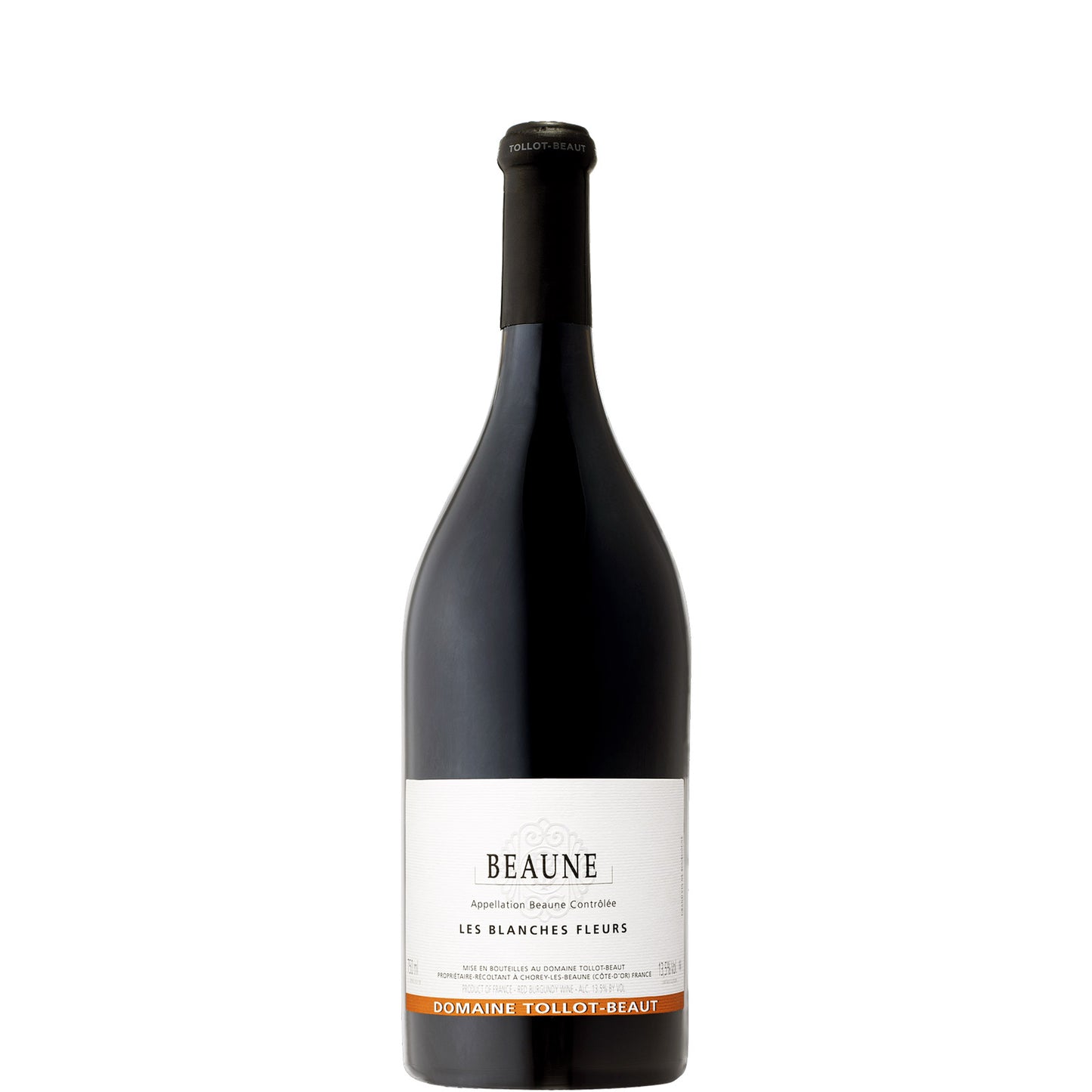
Beaune 'Les Blanches Fleurs', Domaine Tollot-Beaut, 2022
Beaune 'Les Blanches Fleurs', Domaine Tollot-Beaut, 2022
- 75cl
- 13%
- Red Still
- Pinot Noir
Couldn't load pickup availability

Optimal drinking window: Now - 2036
About Beaune 'Les Blanches Fleurs', Domaine Tollot-Beaut, 2022
This wonderful village Beaune is a consistent high performer that drinks well above its status. It i generously fruited with good ripe tannins to balance and some spice notes above the bright raspberry fruit. Show it a Coq au Vin and it'll give you enormous pleasure. A truly wonderful wine.
Lying just to the north of the Beaune Premier Cru of Clos Du Roi, Domaine Tollot-Beaut's Les Blanches Fleurs is one of the classiest Beaune wines you're liable to find, despite not being a Premier Cru vineyard.
The 2022 is already drinking well and does not require patience as a condition of enjoyment. Over the next two to three years the primary raspberry fruit will knit with the oak and spice to produce something a little more seamless and complex. By 2030 to 2035 we would expect the secondary earthiness and forest-floor character to become more pronounced, adding another dimension.
Tasting Notes
AppearanceBright, clear ruby with a vivid pink rim — youthful and inviting in the glass.
NoseFresh raspberry and wild strawberry up front, with a lift of dried rose petal and a touch of warm spice underneath. There is a faint earthy note — something between damp stone and forest floor — that gives it a sense of place without demanding too much of you.
PalateGenerous and well-proportioned, with ripe but shapely tannins that carry the fruit rather than interrupting it. The raspberry and red cherry are front and centre, backed by a gentle spice and a clean, mineral line that keeps everything honest. Nothing excessive, nothing missing.
FinishMedium-long and clean, with the spice lingering a little past the fruit — satisfying rather than showy.
Overall impressionA village Burgundy that earns considerably more respect than its classification suggests.
Food Pairings
In Burgundy, this is exactly the kind of wine that would appear alongside a proper Coq au Vin — the slow-braised chicken pulling the fruit forward while the sauce mirrors the wine's earthy depth. The locals would think nothing of pairing it with a plate of jambon persillé, the cold pressed ham terrine that is a Sunday staple across the Côte. It is also the natural companion to Époisses, the famously pungent washed-rind cheese of the region, where the wine's fruit stands up rather than flinches. Simpler meals work just as well: roast guinea fowl with thyme, or a lentil and lardon salad warm from the pan.
We think this wine would go well with
Serve at around 16°C — cooler than you might think, which keeps the fruit precise and the acidity lively. At four years old the 2022 does not demand a long decant, but 20-30 minutes in a carafe will open it up nicely and let the spice notes come forward. A standard Burgundy bowl — wide enough to let the aromatics breathe without the wine warming too fast — is the glass to reach for.
Les Blanches Fleurs sits just north of the Beaune Premier Cru Clos du Roi, on the gentle mid-slope that defines the best of Beaune's vineyards. The soils here are limestone-rich with a clay component that retains just enough moisture to keep the fruit generous without losing freshness. The elevation and easterly aspect give good morning sun with natural cooling in the afternoon, which helps preserve the bright, lifted character that marks Tollot-Beaut's wines from this site. It is village-level on paper, but the address tells a different story.
Beaune is Burgundy's historic wine capital and produces some of the Côte de Beaune's most food-friendly reds, predominantly from Pinot Noir. The appellation is dominated by Premier Cru vineyards — over 75% of the classified land carries that status — which makes a genuinely fine village Beaune something of a rarity worth seeking out. Compared to its neighbours Pommard and Volnay, Beaune tends toward more approachable, fruit-forward reds with supple tannins rather than the muscle of the former or the silkiness of the latter. At its best, as here, it offers the kind of honest, complete drinking that Burgundy lovers sometimes overlook while chasing more famous names.
The 2022 growing season in Burgundy began with a worryingly dry spring that had vignerons checking soil moisture levels weekly, followed by a summer that alternated between intense heat and welcome rainfall. The vines handled the stress remarkably well, producing smaller berries with concentrated flavours, though yields dropped significantly across both the Côte d'Or and Chablis. Harvest began earlier than usual, with many producers picking in late August under bright skies.
What emerged from the cellars shows a vintage of surprising finesse given the challenging conditions. The Pinot Noirs display vivid fruit and firm tannins without the jammy weight you might expect from a hot year, whilst the Chardonnays retained their mineral backbone alongside ripe stone fruit flavours. We're finding the village-level wines particularly compelling right now, drinking beautifully with just a year or two of bottle age, though the premier and grand crus will reward patience until the late 2020s.
FAQs
What does this wine taste like?
Bright raspberry and red cherry with a lift of warm spice and a grounding earthy note. The tannins are ripe and well-judged, the finish clean and satisfying. It drinks generously without being soft or simple.
When should I drink it?
It is already very good and there is no need to wait. That said, it will continue to develop nicely until around 2030 to 2032, gaining more complexity and a little more of that earthy, secondary character that makes mature Burgundy so compelling.
What food should I pair it with?
Coq au Vin is the classic answer and it is the right one. Beyond that, think roast guinea fowl, duck legs braised with olives, or a proper jambon persillé. It also handles Époisses and other strong washed-rind cheeses better than most village Burgundies.
Is this worth cellaring?
Yes, within reason. It is not a wine that demands years in the cellar, but it will reward three to five years of patience with added depth and a more integrated character. Do not push it much beyond 2032.
How should I serve it?
Around 16°C, and a short decant of 20 to 30 minutes will help it open up. Use a standard Burgundy bowl to give the aromatics space. Avoid serving it too warm or the fruit turns a little jammy.
Is this really village-level Burgundy?
On paper, yes. In practice, Les Blanches Fleurs sits immediately north of the Clos du Roi Premier Cru and Tollot-Beaut farms it accordingly. The classification does not tell the whole story here, which is part of why it represents such good value relative to its neighbours.

Explore related wines


What are you looking for tonight? Tell me the occasion, a grape, a region — or just try a suggestion below.
Your recommendations will appear here.
-
-
Speak to one of our Wine Gurus
Speak to a Wine GuruWith years of experience, our team can help you with all your wine buying and selling needs