

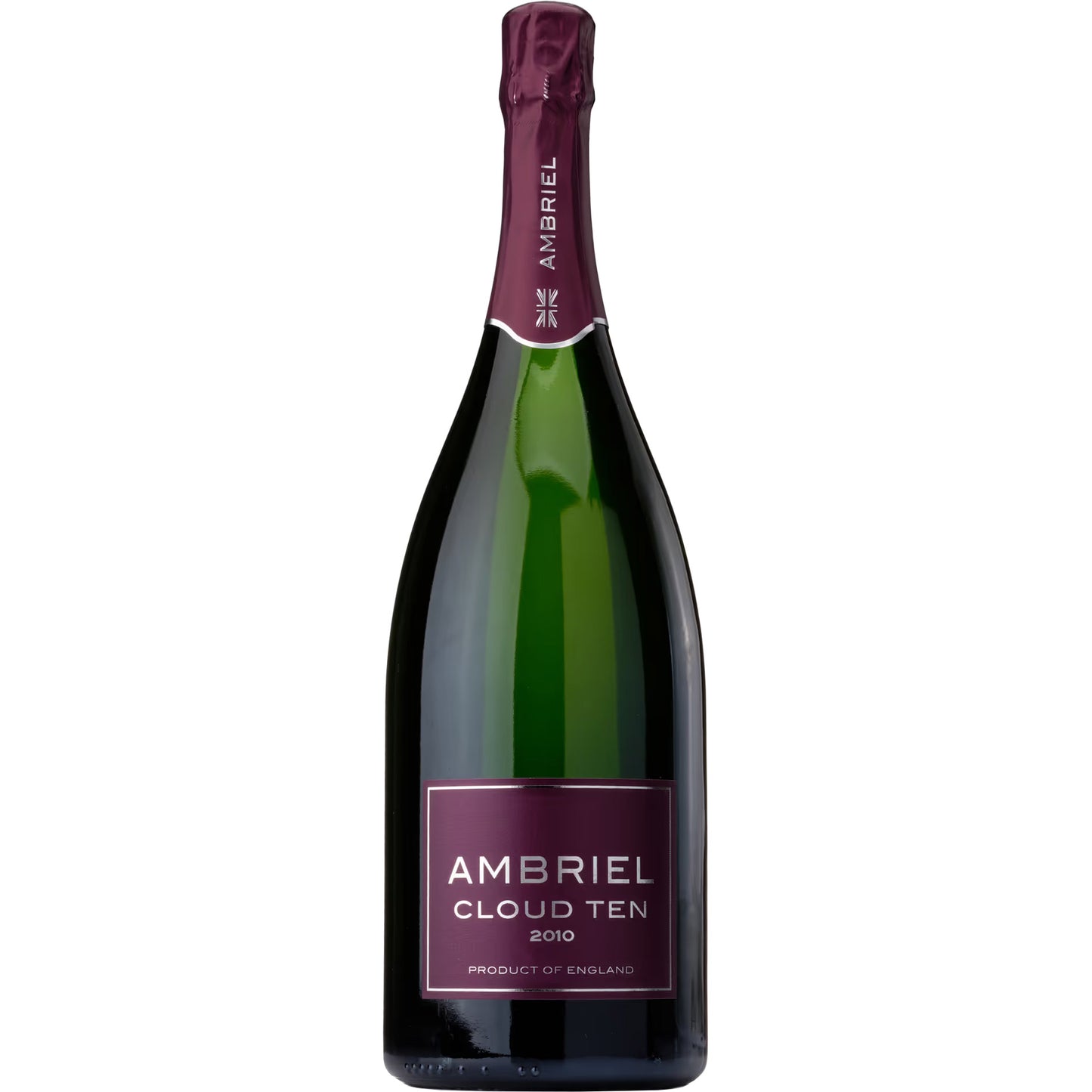
Ambriel, 'Cloud 10', 2010 - Magnum
Ambriel, 'Cloud 10', 2010 - Magnum
- 150cl
- 11.5%
- White Sparkling
- Chardonnay, Pinot Noir, Pinot Meunier
Couldn't load pickup availability

Optimal drinking window: 2026 - 2032
Ambriel have always taken the long view when it comes to crafting their wines and Cloud 10 is the ultimate expression of that philosophy - with a decade of ageing it more than lives up to its name.
Made from 70% Chardonnay, 27% Pinot Noir, 3% Pinot Meunier, and bottle-aged for over 10 years on lees, Cloud 10 is beautifully evolved yet still remarkably fresh. Layers of baked apple, lemon curd, toasted brioche and almond unfold with grace, while the fine mousse and vibrant acidity keep everything lifted and precise. Complex but not complicated, luxurious without ever being heavy.
Cloud 10 is in a very good place right now — the primary fruit has long since integrated with the lees-derived complexity, and the wine is sitting in what feels like a confident, open window. The magnum format has preserved freshness particularly well, so there is no urgency to rush. Over the next two to three years the almond and brioche notes will continue to deepen, and the acidity will slowly soften at the edges. We'd expect it to hold its form until around 2032, after which the freshness that keeps everything lifted may begin to ease — at which point it will be a question of personal preference for the style.
What the critics say:
"I include the 2010 Ambriel Cloud 10 because I love it and because everyone should buy everything in magnums. Wendy and Charles have gone all This is Spinal Tap by taking Cloud 9 up to 10, but really up to 11 for that extra push over the cliff. And it’s a corker, a Chardonnay-rich blend aged for 11 years (see?), it’s full of fresh and baked apple, a touch of cream and something fruity and candied."
Tasting Notes
AppearancePale gold with a warm amber blush at the edge, and a fine, persistent bead that rises slowly and deliberately.
NoseThere's an immediate sense of age here — baked apple and lemon curd give way to toasted brioche and roasted almond, with a faint trace of candied citrus peel underneath. It smells like a wine that has been somewhere and is entirely comfortable about it.
PalateThe mousse is exceptionally fine, almost creamy in texture, and the acidity — still very much present — pulls everything into focus. Flavours of baked apple, almond cream and a squeeze of preserved lemon run through the mid-palate with real composure. Nothing is overdone; nothing is fading.
FinishLong and quietly persistent, with a chalky mineral dryness that lingers well after the glass is empty.
Overall impressionEnglish sparkling wine making a serious, unhurried case for itself — and winning it.
Food Pairings
In Sussex, this kind of wine finds its natural home with the county's coastal larder — dressed Selsey crab on sourdough, or simply steamed lobster with good butter. Aged English Cheddar or a mature Lincolnshire Poacher works beautifully with the brioche and almond character of the wine, the nuttiness in both meeting in the middle. A plate of smoked salmon with crème fraîche and blinis is the kind of pairing that feels obvious for a reason. If you're pushing into something more substantial, roast chicken with a tarragon cream sauce is a very English match that the Chardonnay backbone handles with ease.
We think this wine would go well with
Serve at around 9-10°C — cool enough to keep the mousse lively, but not so cold that you shut down the complexity that a decade of ageing has built. No need to decant, but do give it 20-30 minutes in the fridge rather than an ice bucket, which can chill it too aggressively. A tulip-shaped Champagne glass rather than a flute will give the aromas room to open up, which at this age they genuinely need.
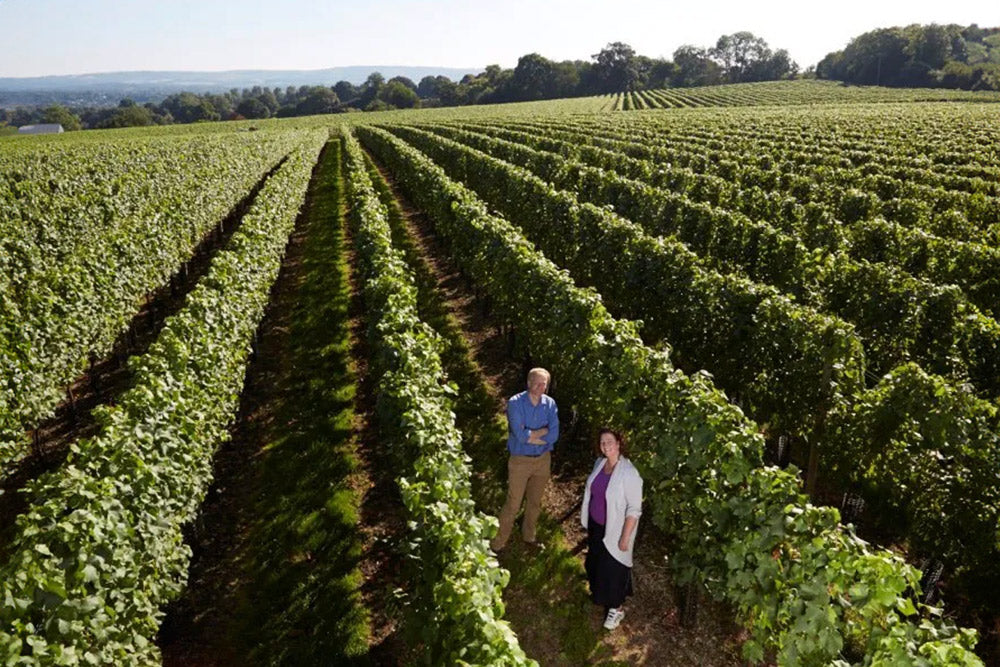
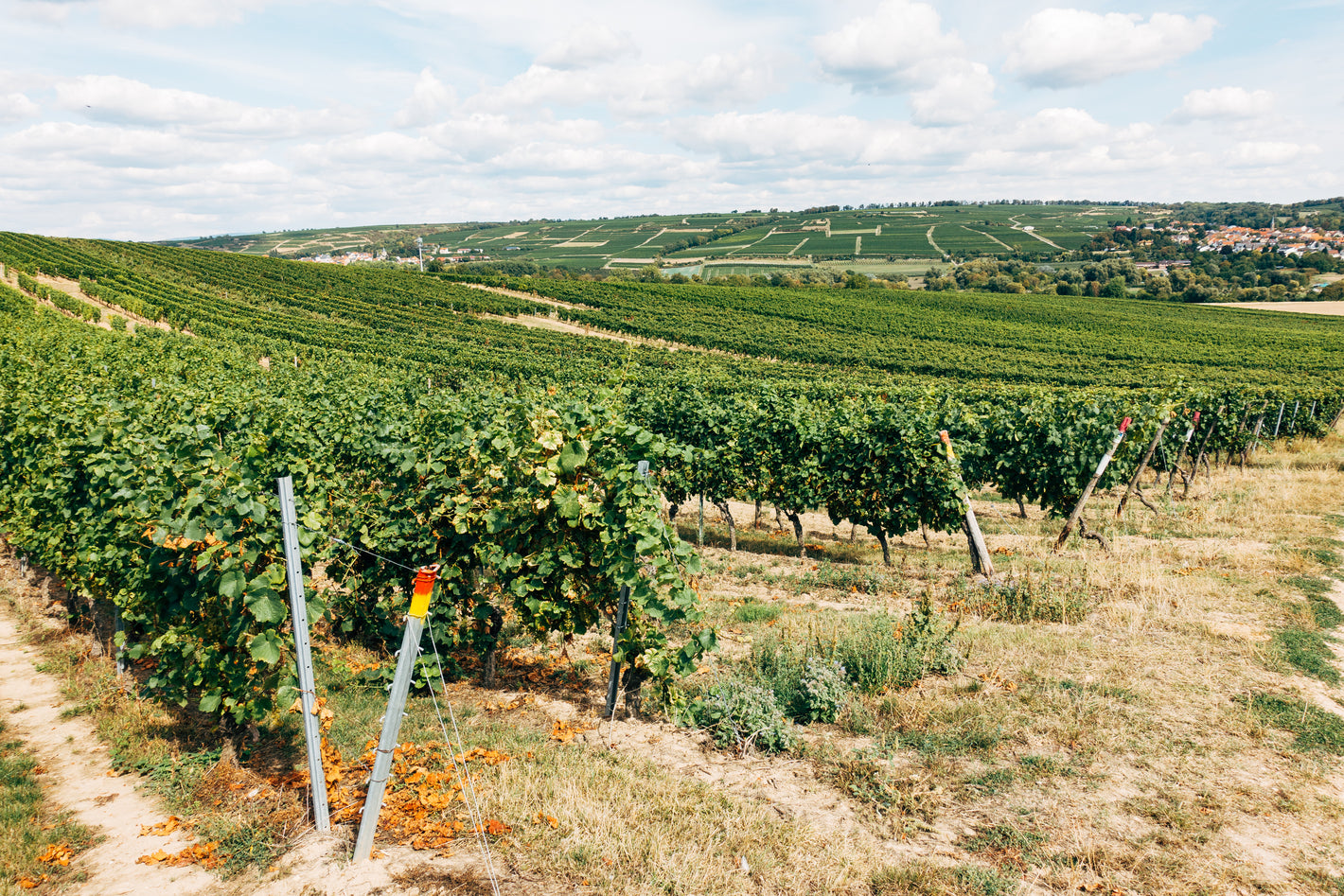
Ambriel's vineyards sit on the chalk and clay soils of the South Downs in West Sussex, the same geology that underpins much of the region's reputation for fine sparkling wine. The chalk drains freely, stresses the vines just enough, and lends a mineral backbone to the finished wine — the kind of steely freshness that keeps a wine like Cloud 10 taut even after a decade in bottle. The cool maritime climate slows ripening and preserves the natural acidity that makes extended lees ageing not just possible but genuinely rewarding.
West Sussex falls within the broader English Wine PDO, which covers still and sparkling wines produced in England and Wales. There is no appellation system as prescriptive as Champagne's, but the South Downs chalk belt has emerged as a recognised heartland for English sparkling wine, drawing inevitable comparisons with the Champagne region across the Channel. What distinguishes English sparkling wine from its French counterpart is not a rulebook but a climate — cooler, later-ripening, and producing a naturally high-acid base wine that rewards the traditional method and, crucially, time.
The 2010 growing season across West Sussex was marked by a cool, unsettled summer that kept viticulturalists on their toes, followed by a dry, warm September that did much of the heavy lifting. That late-season rescue act is something English growers have learned to bank on, and in 2010 it delivered well-ripened fruit with good natural acidity intact — the combination that makes this corner of England worth paying attention to. Chardonnay and Pinot Noir, the twin engines of the region's sparkling wine production, both came through with concentration and freshness rather than one at the expense of the other.
What 2010 produced in West Sussex is a set of base wines — and increasingly, released sparkling wines — with real structural definition: firm acidity, precise fruit character, and enough depth to reward patience. The region was still finding its footing commercially in 2010, so fewer wines from this vintage reach the market than you might hope, but those that do tend to drink well now, having shed any youthful austerity while retaining the spine that makes them worth seeking out. We would not hold on much longer — drink until 2026 or so.
FAQs
What does Cloud 10 taste like?
Think baked apple, lemon curd, toasted brioche and roasted almond, all kept fresh and precise by a fine mousse and persistent acidity. It has the texture and composure of an aged Champagne but with a distinctly English freshness underpinning it all.
When should I drink this?
Right now is genuinely a great answer — it's open, expressive and drinking with real confidence. That said, the magnum format means there's no rush, and it will hold well until 2032. If you have more than one, open the first tonight and leave the second for a few more years.
Is this worth buying in magnum?
For an aged sparkling wine, the magnum is arguably the ideal format. The larger volume means slower, more even ageing — which in Cloud 10's case has produced a wine with more composure and tension than you'd typically find from a standard bottle at the same age. It's also a proper occasion bottle, which feels appropriate.
What food should I serve with Cloud 10?
Dressed crab, smoked salmon, lobster with butter, or a well-aged hard cheese are all excellent choices. The brioche and almond character in the wine also makes it a very natural partner for roast chicken with a cream sauce. It's versatile enough to hold its own across a whole dinner rather than just an aperitif.
How does this compare to aged Champagne?
It holds up extremely well. The chalk geology and cool climate of West Sussex give it a structural backbone that is genuinely comparable, and the extended lees ageing has produced a complexity that doesn't feel like it's apologising to anyone. The style is arguably a touch fresher and less toasty than a mature blanc de blancs Champagne, which for many people will be a point in its favour.
How should I serve it?
Chill to around 9-10°C and serve in a tulip-shaped glass rather than a flute — the wine has too much to say to be squeezed into a narrow opening. No need to decant. If you're pulling it from a cellar, give it around 30 minutes in the fridge before serving.
Explore related wines


What are you looking for tonight? Tell me the occasion, a grape, a region — or just try a suggestion below.
Your recommendations will appear here.
-
-
Speak to one of our Wine Gurus
Speak to a Wine GuruWith years of experience, our team can help you with all your wine buying and selling needs