

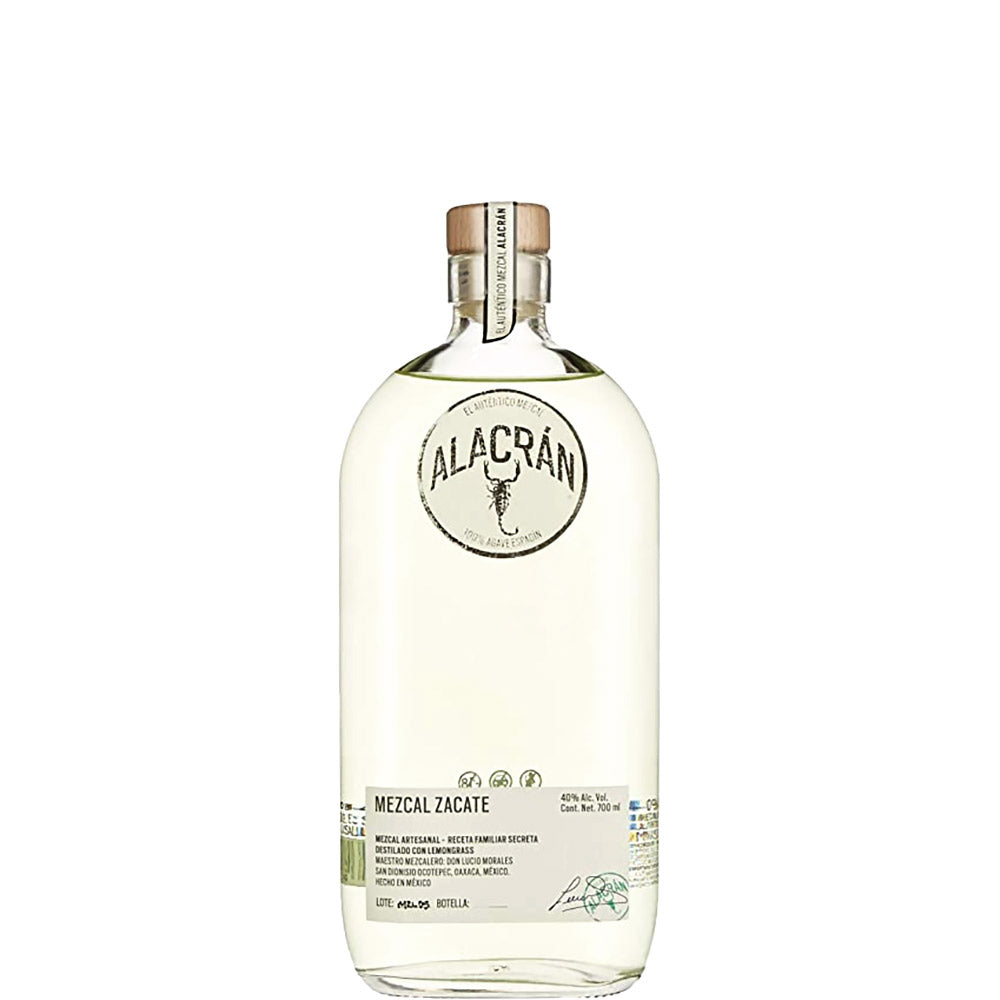
Alacrán, Mezcal Zacate, Nv - 70cl
Alacrán, Mezcal Zacate, Nv - 70cl
- 70cl
- 40%
- Spirits
- Agave
Couldn't load pickup availability

Optimal drinking window: 2026 - 2028
The Alacrán Mezcal Zacate is smooth yet lively, with gentle smokiness, a clean agave core and bright acidity making it surprisingly versatile. Ideal for sipping neat, or paired with grilled seafood, tacos al pastor, or spicy-savoury dishes.
Alacrán was founded in 2010 in Mexico City. Their Mezcal is made in the town of San Dionisio Ocotepec in Oaxaca, Mexico, and is crafted using agave espadín grown for 7-10 years. The production is artisanal; the agave hearts are roasted underground, crushed using a tahona (traditional grinding wheel), naturally fermented with native yeasts, and double-distilled in small-batch copper stills.
As a non-vintage spirit rather than a wine, Alacrán Zacate is made to be enjoyed now and over the next year or two rather than cellared. Once opened, the bottle will hold well for several months if kept sealed and away from direct light, and some drinkers find that a little air softens any initial alcohol edge after the first pour. There is no secondary development to wait for here — the interest is in the agave, the process, and the place, all of which are present from the first glass.
Tasting Notes
AppearanceClear and bright with a faint silver-straw shimmer in the glass.
NoseThe smoke announces itself gently — think dying embers rather than bonfire — with the agave's own green, slightly vegetal freshness holding firm underneath. There's a faint citrus lift, something close to lime zest, and a whisper of white pepper that keeps the whole thing lively.
PalateSmooth and more approachable than the nose suggests, with that clean agave core running straight through the middle. The smoke integrates rather than dominates, and the bright acidity gives the palate real energy — this is a mezcal that moves, rather than sitting heavy. A touch of mineral warmth on the mid-palate is exactly what you want from espadín made this way.
FinishMedium-length, clean, and gently warming, with the smoke fading to leave the agave's mineral character as the final word.
Overall impressionAn honest, well-made mezcal that respects the tradition it comes from without making you feel like you need a seminar to enjoy it.
Food Pairings
In Oaxaca, mezcal is rarely far from the table at a proper meal. It sits naturally alongside tlayudas — those large, crisped tortillas loaded with black beans, Oaxacan cheese, and tasajo (air-dried beef). Grilled chapulines, the toasted grasshoppers seasoned with lime and chilli that appear everywhere in the market stalls of the Central Valleys, are a classic pairing; the smoke and mineral bite of the mezcal cuts straight through the salt and crunch. Mole negro, Oaxaca's complex, dark chilli sauce served over turkey or chicken, is another natural match — the earthiness of the mole and the roasted agave character play off each other rather than competing. At the end of a meal, it reappears alongside Oaxacan chocolate, bitter and grainy, which softens the spirit's heat beautifully.
We think this wine would go well with
Serve neat at room temperature — somewhere around 18-20°C — in a small, wide-mouthed copita or a short tumbler, which concentrates the agave aromas without trapping the alcohol. There is no need to chill it; cold mutes the very character you are paying for. If you are mixing, it holds up well over a large ice cube in a rocks glass, where the gradual dilution actually opens the spirit up as you drink.
San Dionisio Ocotepec lies in the Central Valleys of Oaxaca, a high-altitude, semi-arid landscape where espadín agave grows slowly in rocky, mineral-rich soils. The dry climate and poor soils stress the plant over its long growing cycle, concentrating the sugars and flavour compounds in the piña. Altitude — typically 1,500 metres and above — means cooler nights, which support the clean, bright character that distinguishes well-made Oaxacan mezcal from more rustic expressions. The native yeasts present in the open-air fermentation tanks are as much a product of this specific environment as anything grown in the ground.
Mezcal holds a Denominación de Origen in Mexico, restricting production to specific states — Oaxaca being by far the most significant, responsible for the vast majority of all mezcal produced. Within Oaxaca, the Central Valleys and Sierra Sur sub-regions have the deepest tradition, with San Dionisio Ocotepec falling squarely in that heartland. Unlike tequila, which is restricted to blue agave, mezcal can be made from dozens of agave varieties; espadín is the most widely planted and forms the backbone of most commercial production, though single-variety expressions from wild agaves command growing interest and prices to match.
FAQs
What does Alacrán Zacate taste like?
Clean and lively, with a measured smokiness that never overwhelms the agave's own fresh, slightly mineral character. There's a bright citrus lift and a gentle warmth on the finish — approachable enough for mezcal newcomers, honest enough to satisfy anyone who knows the category.
How should I drink it?
Neat, at room temperature, in a small copita or short tumbler. Chilling it will mute the agave character, which is rather the point. It also works well in cocktails — a mezcal Negroni or a simple mezcal sour both benefit from the Zacate's clean profile.
What food works well with this mezcal?
Grilled seafood, tacos al pastor, and anything with chilli heat or char are natural partners. The smoke and acidity cut through rich, savoury dishes without fighting them. If you are going traditional, try it alongside grilled meats or Oaxacan-style mole.
Is this worth buying in quantity to keep?
Not really. This is a spirit built for pleasure now, not the cellar. Buy what you will drink over the next year or so, keep it sealed and out of direct light, and enjoy it while it's fresh.
What makes Alacrán Zacate different from other mezcals?
The balance, mainly. A lot of entry-level mezcals lean hard on smoke at the expense of everything else. The Zacate keeps the smoke in its place and lets the espadín agave — grown for up to ten years in Oaxaca's rocky soils — do the talking. Artisanal production using a tahona stone wheel and open-air natural fermentation adds genuine character that industrial methods cannot replicate.
How is mezcal different from tequila?
Both come from agave, but mezcal can be made from dozens of different varieties (this one uses espadín), whereas tequila is restricted to blue agave grown in specific regions. The key difference in flavour comes from the roasting process: mezcal agave hearts are cooked in earthen pits, which gives that characteristic smokiness. Tequila agave is typically steam-cooked, producing a cleaner, less smoky spirit.

OUR GROWERS
Alacrán

What are you looking for tonight? Tell me the occasion, a grape, a region — or just try a suggestion below.
Your recommendations will appear here.
-
-
Speak to one of our Wine Gurus
Speak to a Wine GuruWith years of experience, our team can help you with all your wine buying and selling needs